
What Is Repetitive Strain Injury?
Repetitive Strain Injury is an overuse condition that develops when repeated movements, force, posture, or limited recovery irritate muscles, tendons, nerves, or joints. Common symptoms include pain, stiffness, tenderness, weakness, or reduced movement in the affected area. Symptoms may build gradually during tasks such as typing, lifting, gripping, or assembly work.
Quick Facts About Repetitive Strain Injury
Category
Overuse work injury
Used for
Describing symptoms from repeated physical demands
Common confusion
A repetitive strain injury is not one specific diagnosis
Also called
Repetitive stress injury, RSI
Often discussed with
Work Injury Treatment, Corrective Exercise Therapy
Key Takeaways About Repetitive Strain Injury
- Repeated task demands distinguish this condition from a single sudden injury.
- Symptoms may appear during work or develop after repeated activity.
- Repetitive strain injury is not limited to office work.
How Repetitive Strain Injury Works
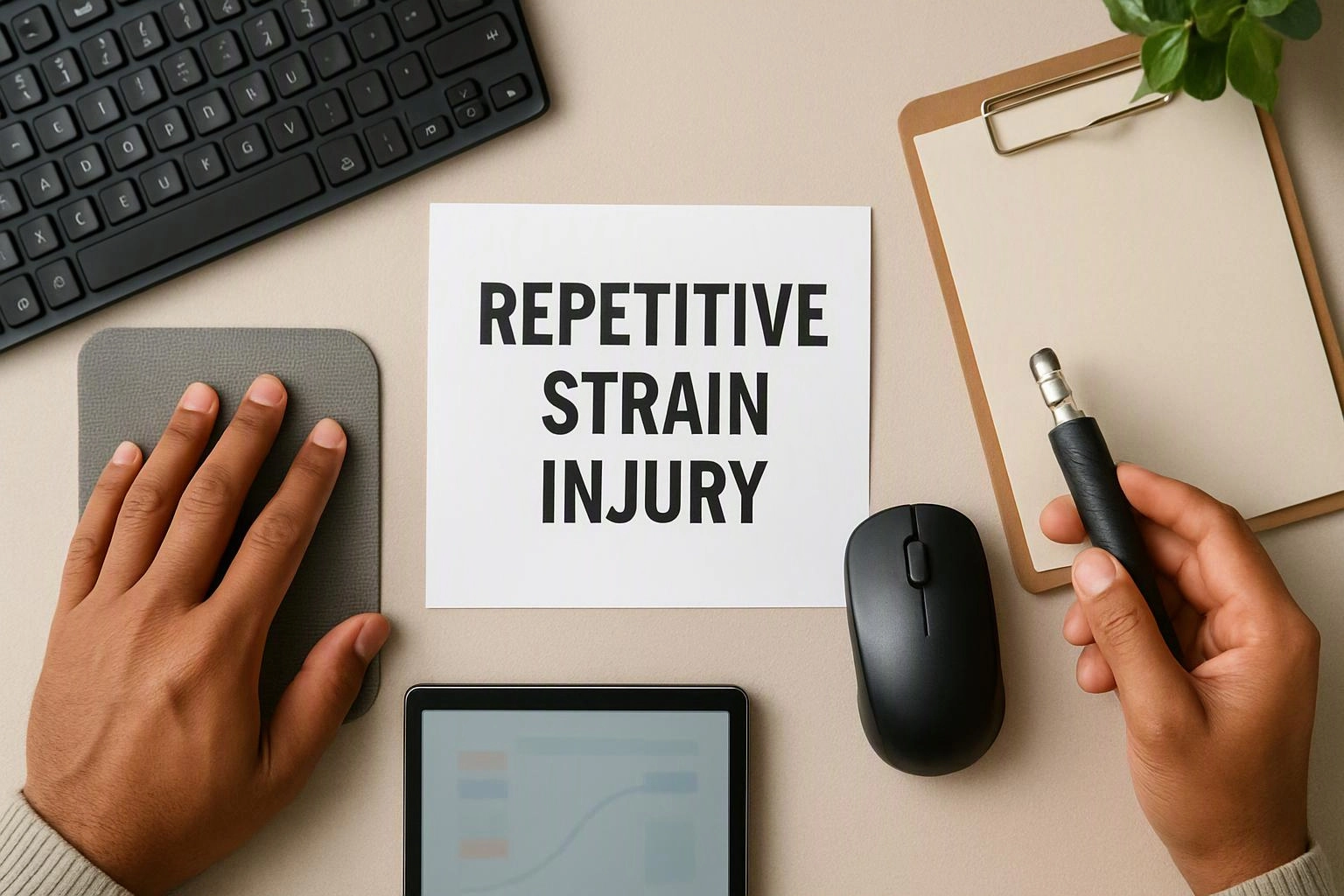
Repetitive Strain Injury develops when body tissues receive repeated demands without enough recovery. Repeated gripping may stress the hand and forearm, while sustained neck posture may affect the muscles around the cervical spine. Symptoms can change with task intensity, body position, and rest.
Related glossary terms: Muscle Spasm, Nerve Root, Range Of Motion.
Assessment focuses on the work activity, the affected area, symptom timing, and movement. A clinician may review range of motion, strength, tenderness, and nerve-related signs. Work Conditioning may address how the body performs job tasks, while Trigger Point findings can help describe localized muscle sensitivity. The term describes a pattern of strain, so the underlying tissue and contributing task still require separate evaluation.
From the Arrowhead Clinic Chiropractor team
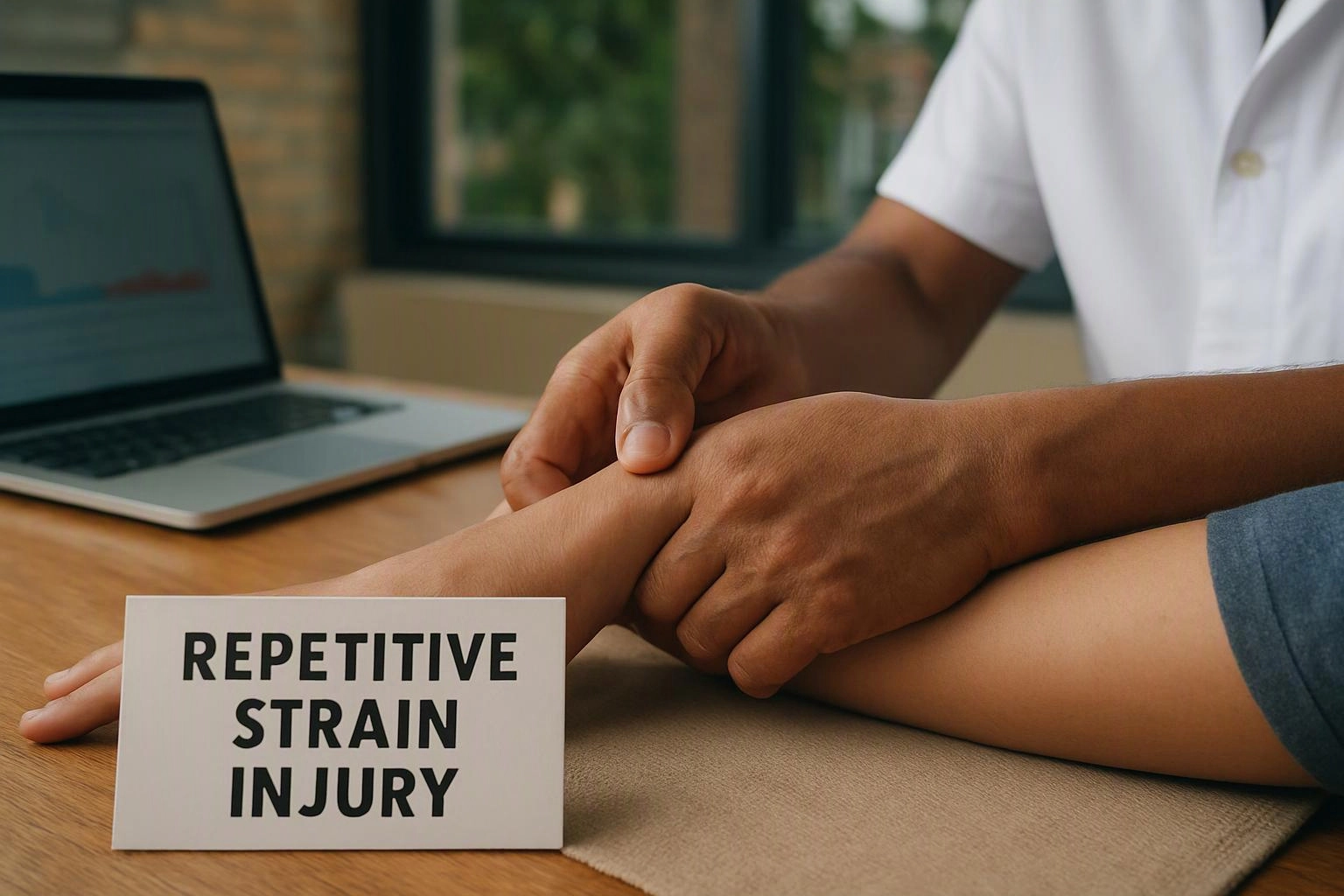
When we assess repetitive strain injury, we review the job task, symptom pattern, affected body area, and movements that increase discomfort. We also check posture, range of motion, strength, and signs that may point to nerve involvement. Our team uses those findings to distinguish repeated strain from a single-event injury.
Repetitive Strain Injury in Practice: A Real-World Example
A warehouse worker repeatedly grips and lifts packages during a shift. Gradual wrist and forearm soreness that worsens with gripping may fit a repetitive strain pattern and deserves an evaluation of both the symptoms and the task.
Related Services
Related Terms
Muscle Spasm
A muscle spasm is an involuntary tightening of muscle tissue that can feel sudden, firm, or…
Nerve Root
Nerve Root is a bundle of nerve fibers that branches from the spinal cord through an…
Range Of Motion
Range Of Motion is the available movement at a joint, measured by how far a body…
Trigger Point
A trigger point is a sensitive, taut area within a muscle that may produce local tenderness…
Arrowhead Clinic Chiropractor
Have Questions About Repetitive Strain Injury?
Contact Arrowhead Clinic Chiropractor for practical guidance on Repetitive Strain Injury and related chiropractor work in Atlanta.