
What Is a Muscle Spasm?
A muscle spasm is an involuntary tightening of muscle tissue that can feel sudden, firm, or painful. The contraction may limit movement and create protective tension around an irritated area. Spasms can affect the back, neck, or limbs and may occur after strain, prolonged posture, repetitive activity, or other sources of musculoskeletal stress.
Quick Facts About Muscle Spasm
Category
Musculoskeletal symptom
Used for
Describing involuntary muscle tightening
Common confusion
Muscle soreness or a trigger point
Also called
Muscle cramp, Muscle contraction
Often discussed with
Back Pain Treatment
Key Takeaways About Muscle Spasm
- Spasms involve involuntary muscle tightening.
- Movement may feel restricted while the muscle remains tense.
- A spasm is not the same as ordinary muscle soreness.
How Muscle Spasm Works
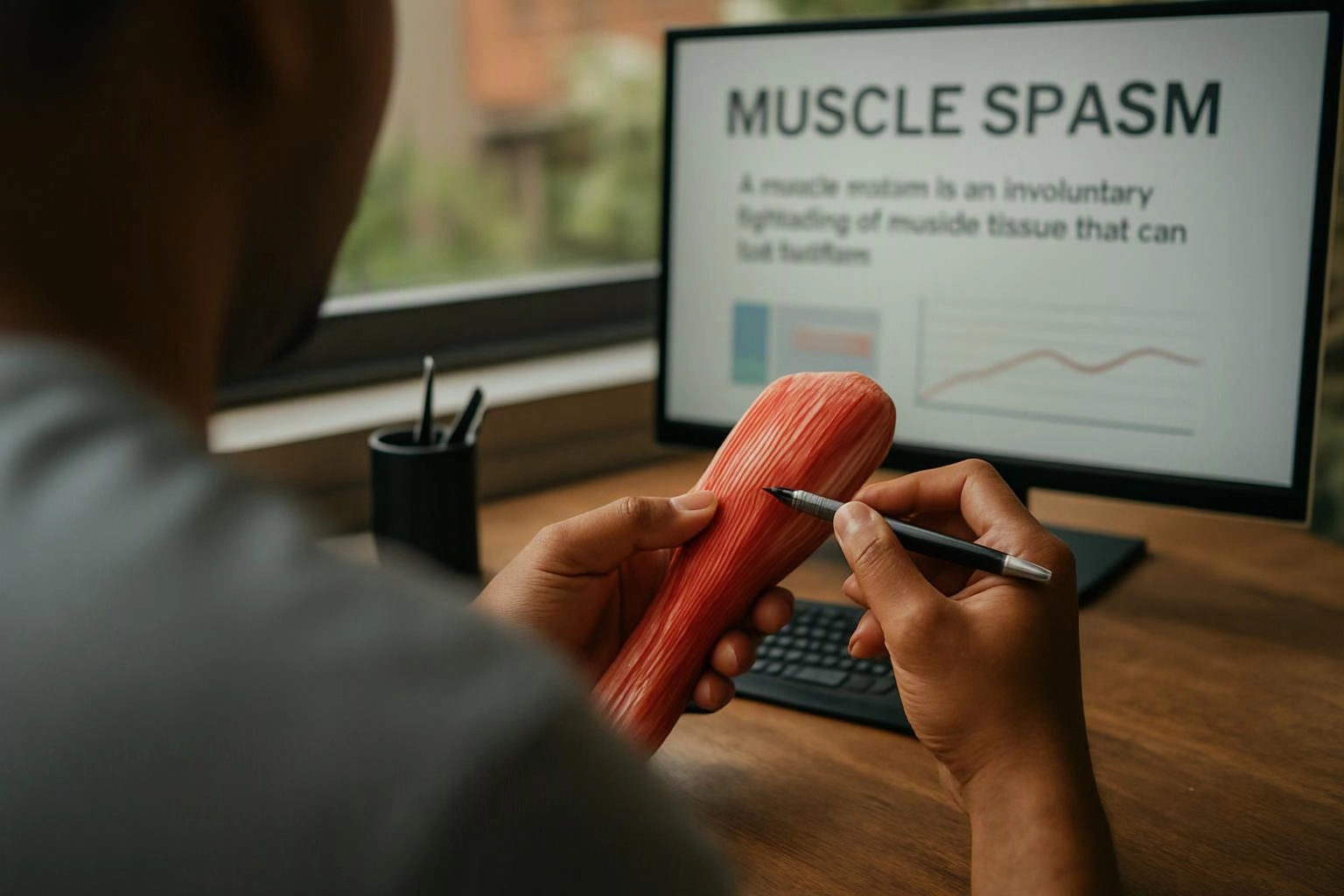
Muscle spasm occurs when muscle fibers contract without conscious control and remain tense for a period of time. The affected area may feel hard, tight, or tender. A person may also notice reduced range of motion because the surrounding muscles guard the area during movement.
Related glossary terms: Trigger Point, Lumbar Spine, Range Of Motion.
A clinical assessment considers where the spasm occurs, what movement changes it, and whether nearby joints, nerves, or soft tissues show related signs. In back pain treatment, the finding helps describe how the muscles respond to strain or irritation. The spasm itself is a symptom, so assessment also looks for contributing factors such as posture, repeated loading, or a recent injury.
From the Arrowhead Clinic Chiropractor team
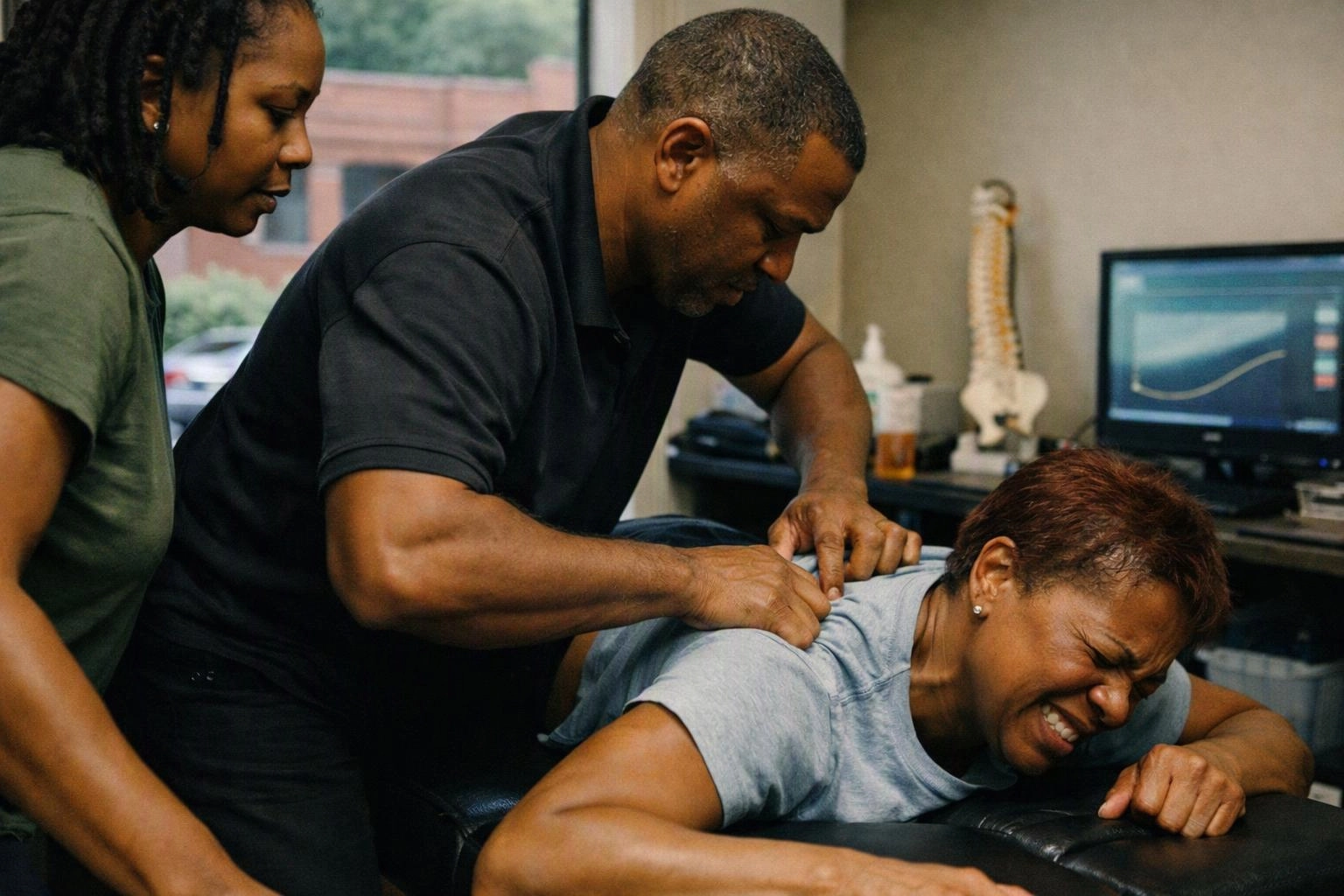
When we assess a muscle spasm, we check the location, tenderness, active movement, and nearby spinal or joint function. We also ask about recent activity and changes in symptoms. That context helps our team distinguish protective muscle tension from findings that may involve another tissue or condition.
Muscle Spasm in Practice: A Real-World Example
A person with back pain after lifting may feel a firm, painful area beside the spine that limits bending. During back pain treatment, the clinician records the restricted movement and checks nearby structures while considering the muscle spasm as part of the overall presentation.
Related Services
Related Terms
Trigger Point
A trigger point is a sensitive, taut area within a muscle that may produce local tenderness…
Lumbar Spine
The lumbar spine is the lower section of the vertebral column between the thoracic spine and…
Range Of Motion
Range Of Motion is the available movement at a joint, measured by how far a body…
Core Stabilization
Core Stabilization is a corrective exercise approach that trains the muscles around the abdomen, pelvis, spine…
Arrowhead Clinic Chiropractor
Have Questions About Muscle Spasm?
Contact Arrowhead Clinic Chiropractor for practical guidance on Muscle Spasm and related chiropractor work in Atlanta.