
What Is a Nerve Root?
Nerve Root is a bundle of nerve fibers that branches from the spinal cord through an opening between neighboring vertebrae. Each nerve root carries signals between the spinal cord and a specific region of the body. Pressure, inflammation, or irritation near a nerve root may produce pain, tingling, numbness, or weakness along its pathway.
Quick Facts About Nerve Root
Category
Spinal nervous system structure
Used for
Understanding radiating nerve symptoms
Common confusion
Confused with the sciatic nerve
Also called
Spinal nerve root
Often discussed with
Sciatica Treatment
Key Takeaways About Nerve Root
- A nerve root links the spinal cord with a specific body region.
- Symptoms may follow the nerve root’s pathway into an arm or leg.
- A nerve root is not the same structure as the sciatic nerve.
How Nerve Root Works
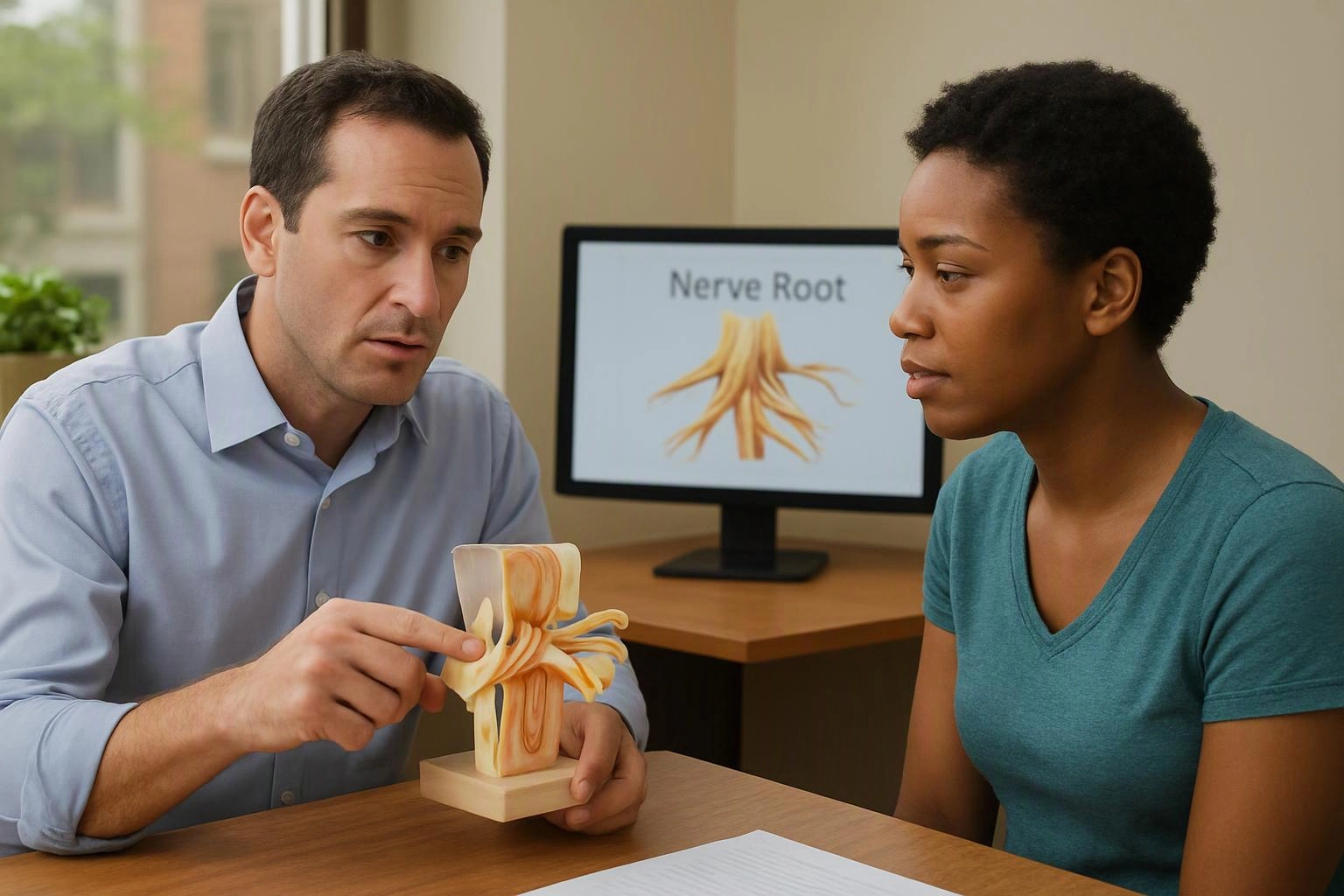
Nerve Root function depends on communication between the spinal cord and the body region served by that root. Sensory signals travel toward the spinal cord, while movement signals travel toward muscles. The location of symptoms can help a clinician consider which nerve pathway may be involved.
Related glossary terms: Lumbar Spine, Sciatic Nerve, Neuropathic Pain.
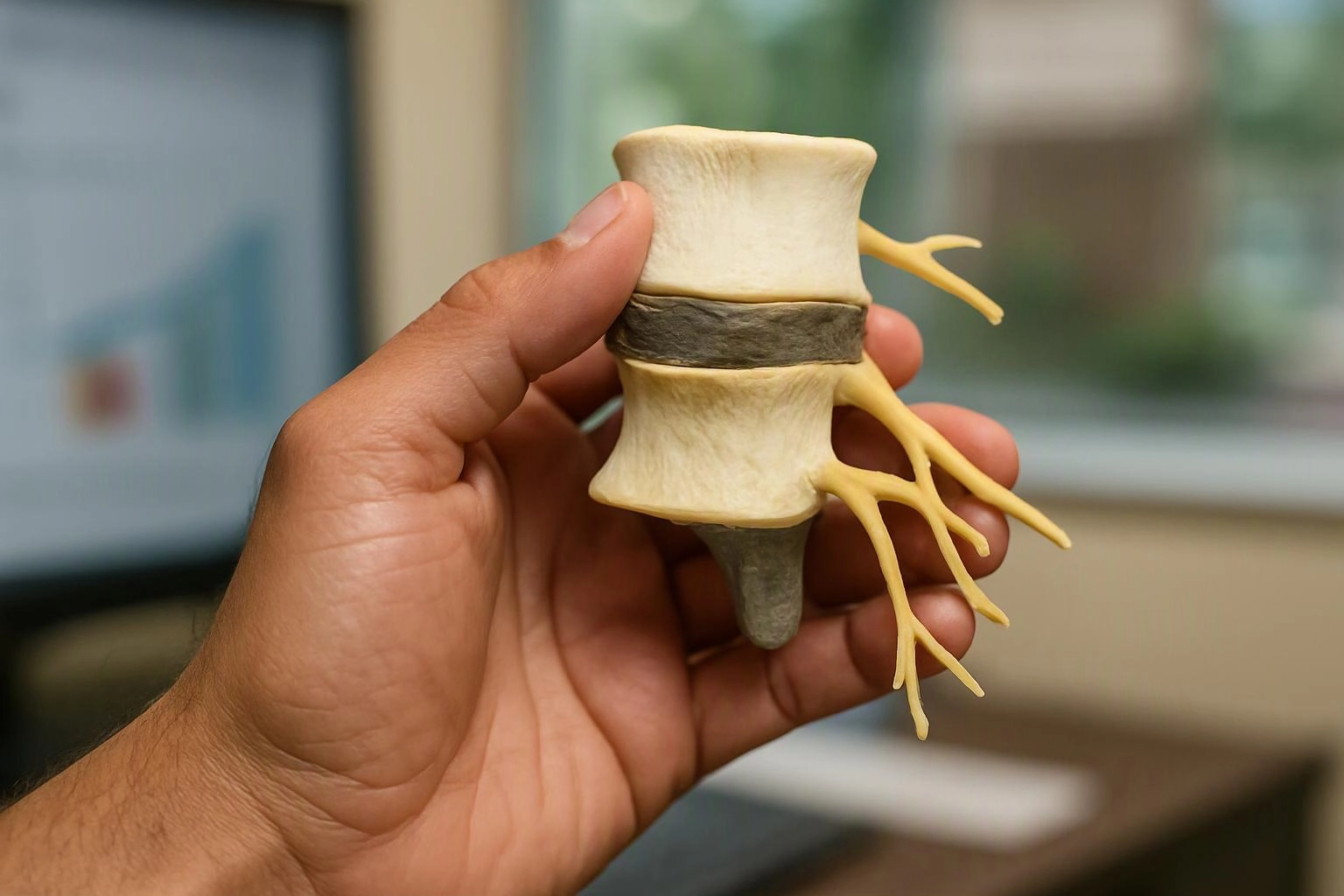
A nerve root passes through a small opening beside the spine. Changes near that opening, such as disc material, joint changes, or swelling, may affect the available space. Affected nerve tissue can create symptoms that extend beyond the back and follow a recognizable pattern into the hip, leg, shoulder, or arm.
Related Structures
The lumbar spine contains nerve roots that serve parts of the lower body. The sciatic nerve forms from several lower spinal nerve roots and carries signals through the leg. This relationship explains why sciatica symptoms can involve both a spinal area and a longer nerve pathway.
From the Arrowhead Clinic Chiropractor team
When we evaluate a nerve root in sciatica care, we connect the reported symptom pattern with the lower back, hip, and leg. We also consider movement, sensation, strength, and spinal function together. Our team uses these findings to guide the clinical picture and distinguish nerve-related symptoms from nearby muscle or joint problems.
Nerve Root in Practice: A Real-World Example
A person with lower back discomfort may also feel burning or tingling that travels into the leg. A clinician may compare the symptom pattern with movement and sensory findings to determine whether a lumbar nerve root could be involved.
Related Services
Related Terms
Lumbar Spine
The lumbar spine is the lower section of the vertebral column between the thoracic spine and…
Sciatic Nerve
The sciatic nerve is the body’s largest peripheral nerve, formed by nerve roots in the lower…
Neuropathic Pain
Neuropathic Pain is pain caused by irritation, injury, or altered signaling within nerves or the nervous…
Vertebral Disc
A vertebral disc is a flexible structure between neighboring spinal bones that cushions movement and helps…
Arrowhead Clinic Chiropractor
Have Questions About Nerve Root?
Contact Arrowhead Clinic Chiropractor for practical guidance on Nerve Root and related chiropractor work in Atlanta.