
What Is a Vertebral Disc?
A vertebral disc is a flexible structure between neighboring spinal bones that cushions movement and helps distribute pressure through the spine. Each disc has a tough outer ring and a softer inner center. Disc tissue can change with age, injury, or repeated strain, sometimes affecting nearby nerves.
Quick Facts About Vertebral Disc
Category
Spinal structure
Used for
Cushioning and pressure distribution
Common confusion
Disc versus spinal bone
Also called
Intervertebral disc, Spinal disc
Often discussed with
Herniated Disc Treatment, Spinal Decompression Therapy
Key Takeaways About Vertebral Disc
- A disc has a firm outer ring and softer inner center.
- Disc changes may affect nearby spinal nerves.
- A disc is not the same as a spinal bone.
How Vertebral Disc Works
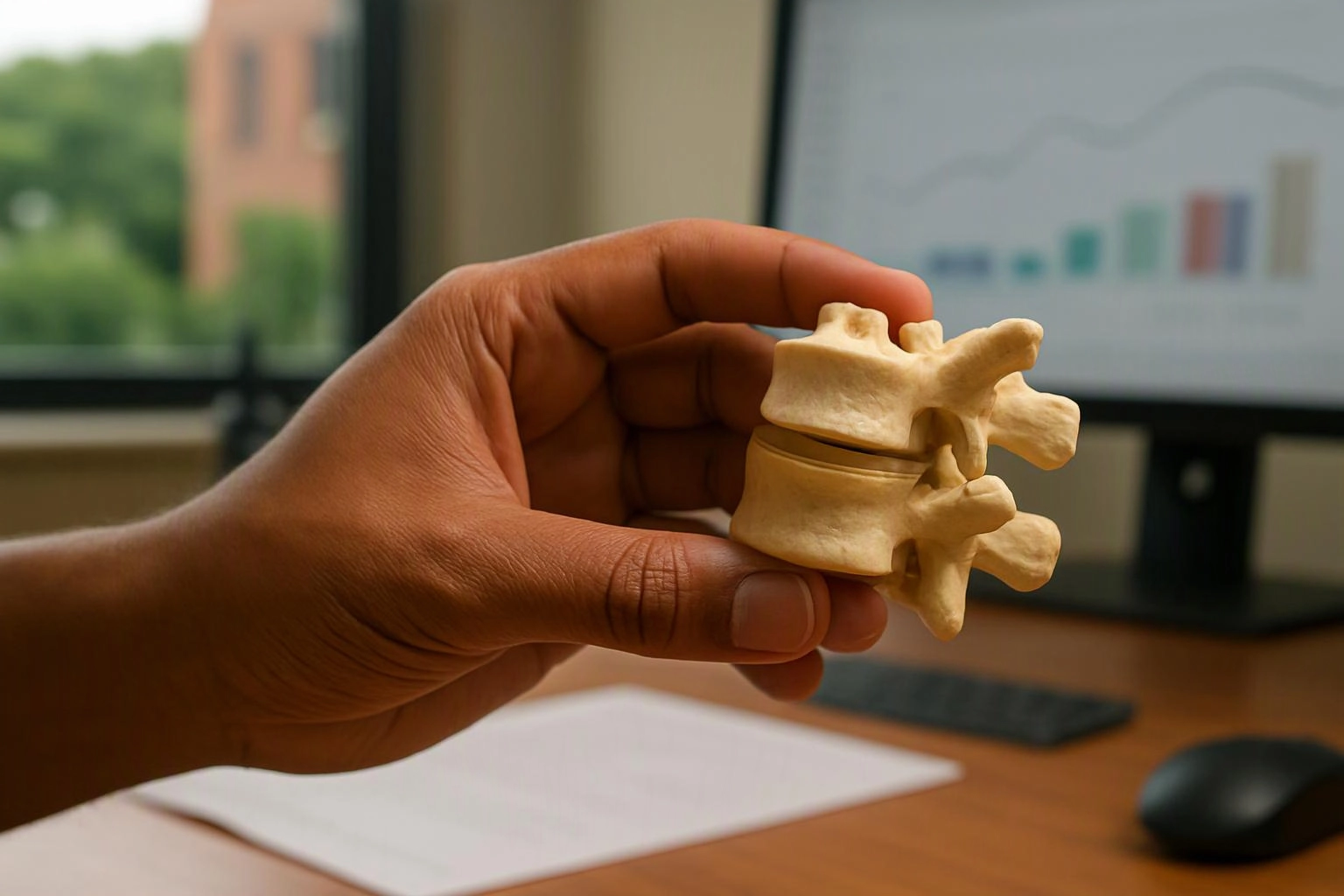
A vertebral disc works as a flexible cushion between adjacent spinal bones. Its outer ring helps contain a softer center, while the whole structure supports controlled movement and spreads pressure through the spine. Disc shape and condition can vary across the cervical, thoracic, and lumbar regions.
Related glossary terms: Lumbar Spine, Nerve Root, Spinal Stenosis.
A disc may bulge or develop a tear when its tissues change. A bulging disc does not always affect a nerve, but a change in disc shape can reduce available space near a nerve root. During Herniated Disc Treatment, clinicians consider symptoms, movement patterns, and examination findings together. Spinal decompression therapy may be discussed as one treatment approach when the clinical picture supports it.
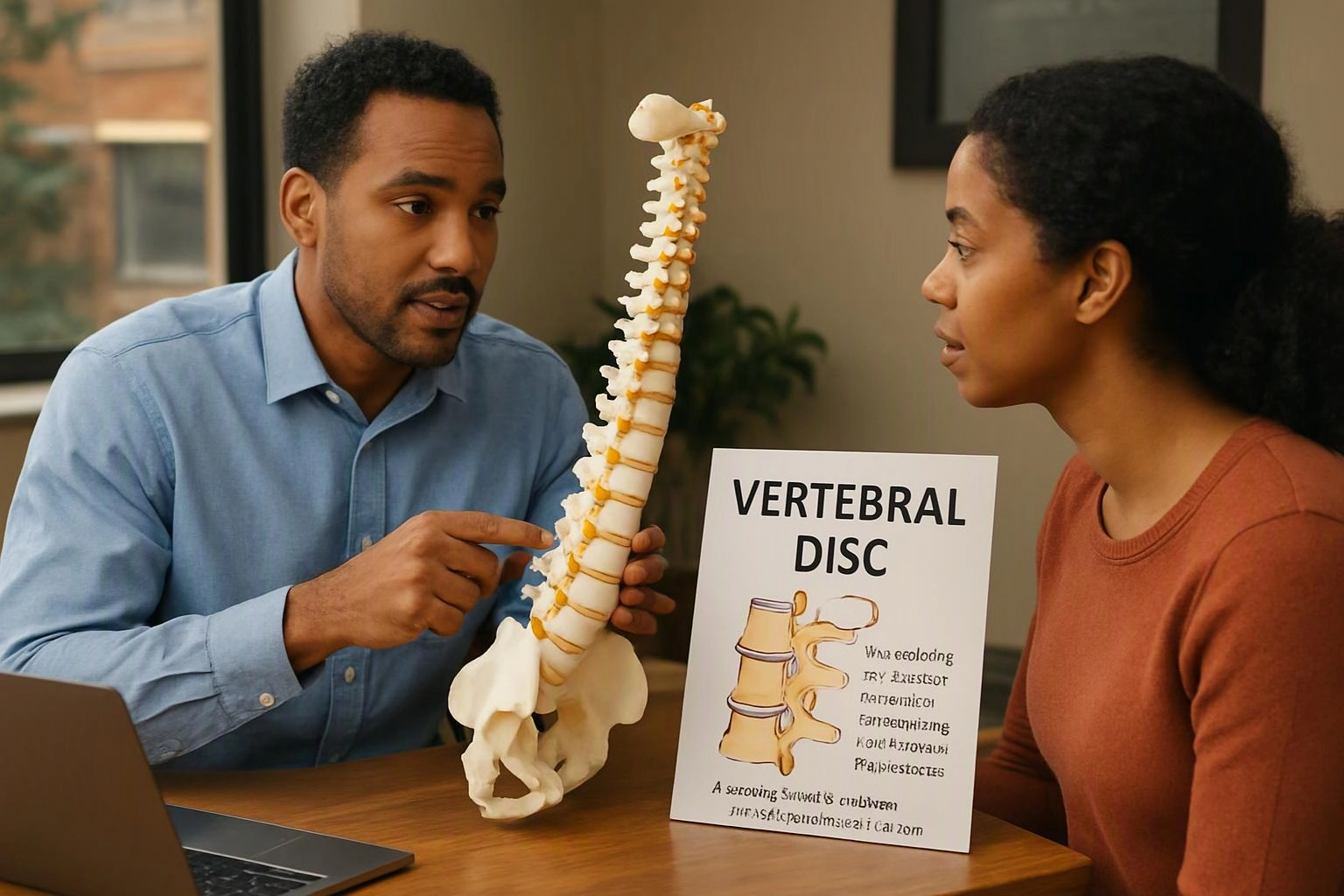
From the Arrowhead Clinic Chiropractor team
When we assess a vertebral disc, we connect the reported symptoms with movement, posture, and physical findings. Our team considers whether the pattern suggests local disc irritation or possible involvement of a nearby nerve. That distinction helps guide the care plan for Herniated Disc Treatment.
Vertebral Disc in Practice: A Real-World Example
A person with lower back pain may also notice symptoms traveling into the leg when a lumbar vertebral disc affects nearby nerve tissue. A clinical assessment examines movement and related findings before discussing Herniated Disc Treatment.
Related Terms
Lumbar Spine
The lumbar spine is the lower section of the vertebral column between the thoracic spine and…
Nerve Root
Nerve Root is a bundle of nerve fibers that branches from the spinal cord through an…
Spinal Stenosis
Spinal Stenosis is a narrowing of the spaces within the spine that can reduce room for…
Sciatic Nerve
The sciatic nerve is the body’s largest peripheral nerve, formed by nerve roots in the lower…
Arrowhead Clinic Chiropractor
Have Questions About Vertebral Disc?
Contact Arrowhead Clinic Chiropractor for practical guidance on Vertebral Disc and related chiropractor work in Atlanta.