
What Is the Sciatic Nerve?
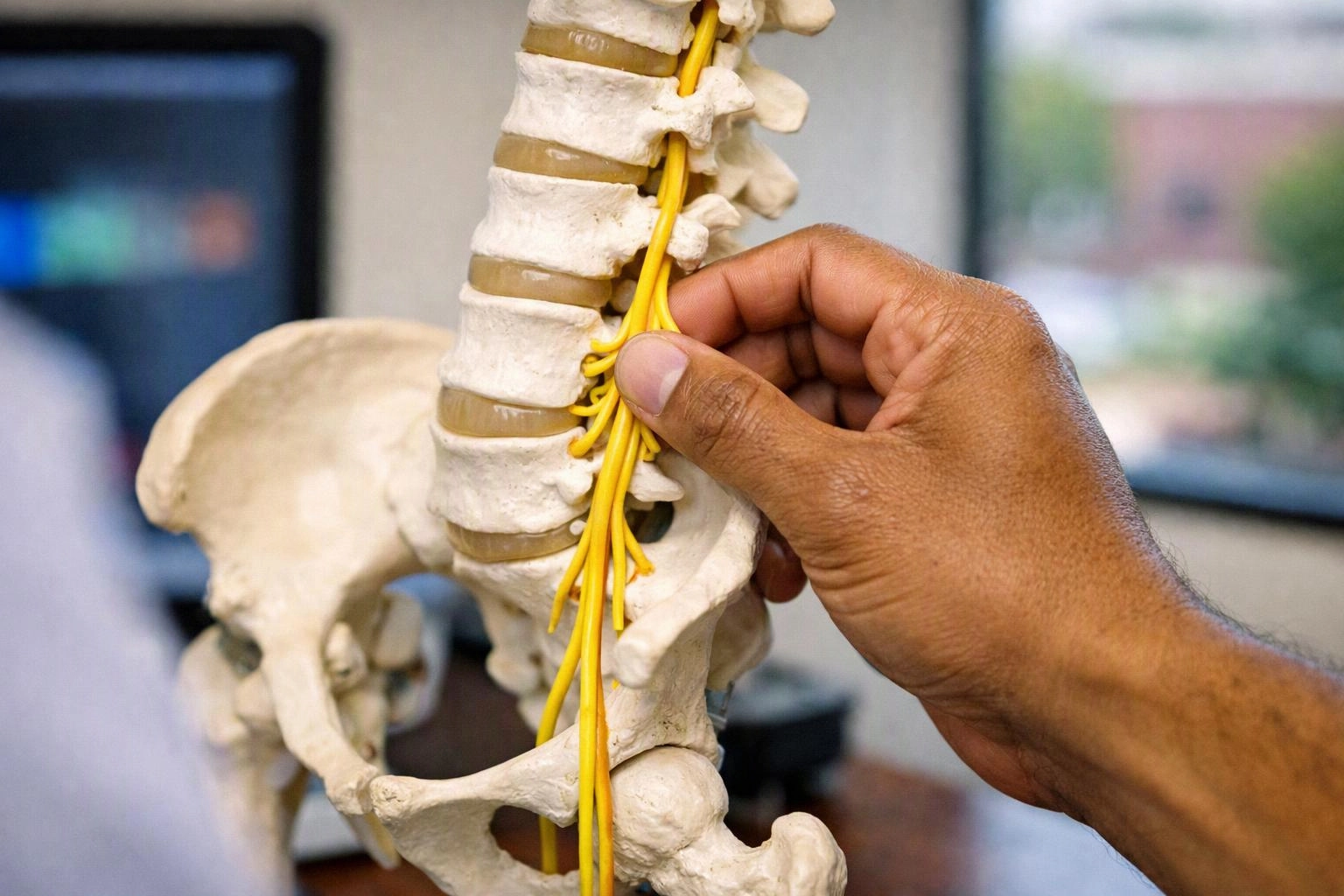
The sciatic nerve is the body’s largest peripheral nerve, formed by nerve roots in the lower spine and extending through the pelvis into each leg. It carries signals between the lower back, buttocks, legs, and feet. Irritation or pressure along this pathway may produce pain, tingling, numbness, or weakness.
Quick Facts About Sciatic Nerve
Category
Peripheral nerve
Used for
Describing lower-back and leg nerve symptoms
Common confusion
The nerve is not the same as sciatica
Also called
Ischiadic nerve
Often discussed with
Sciatica Treatment
Key Takeaways About Sciatic Nerve
- The sciatic nerve follows one continuous pathway from the lower spine into the leg.
- Symptoms may appear along the buttock, thigh, calf, or foot.
- Sciatic nerve pain is not the same as every type of low back pain.
How Sciatic Nerve Works

The sciatic nerve begins from several nerve roots in the lumbar spine and sacral region. These roots join near the pelvis before the nerve travels through the buttock and down the back of the leg. Branches continue toward the lower leg and foot.
Related glossary terms: Lumbar Spine, Nerve Root, Spinal Stenosis.
Nerve roots send movement and sensation signals between the spinal cord and the lower limb. Pressure or irritation near the spine, pelvis, or along the nerve pathway can change those signals. A clinician considers the symptom pattern, strength, sensation, reflexes, and movement of the lower back and leg when assessing possible sciatic nerve involvement.
Sciatic Nerve and Sciatica
Sciatica describes symptoms linked to irritation of the sciatic nerve or its contributing nerve roots. The term does not identify one single cause. A disc problem, narrowed spinal passage, or local tissue irritation may affect the pathway.
From the Arrowhead Clinic Chiropractor team
When we assess sciatic nerve concerns, we review how symptoms travel and how the lower back and leg respond to movement. We also consider strength, sensation, and reflex findings to distinguish nerve involvement from pain that stays in the back or buttock.
Sciatic Nerve in Practice: A Real-World Example
A person with a lower-back disc problem may feel pain that travels through the buttock and down the back of the leg. A Sciatica Treatment evaluation can examine whether the pattern matches sciatic nerve involvement.
Related Services
Related Terms
Lumbar Spine
The lumbar spine is the lower section of the vertebral column between the thoracic spine and…
Nerve Root
Nerve Root is a bundle of nerve fibers that branches from the spinal cord through an…
Spinal Stenosis
Spinal Stenosis is a narrowing of the spaces within the spine that can reduce room for…
Straight Leg Raise
Straight Leg Raise is a clinical examination used to assess how the lower back and sciatic…
Arrowhead Clinic Chiropractor
Have Questions About Sciatic Nerve?
Contact Arrowhead Clinic Chiropractor for practical guidance on Sciatic Nerve and related chiropractor work in Atlanta.