
What Is Whiplash-Associated Disorder?
Whiplash-Associated Disorder is a group of neck-related symptoms and functional problems that may follow a sudden head and neck movement. The term covers more than a neck strain. It may involve pain, stiffness, reduced movement, headaches, or changes in how the neck and nearby muscles function after an acceleration-deceleration event.
Quick Facts About Whiplash-Associated Disorder
Category
Neck injury condition
Used for
Describing post-whiplash symptoms
Common confusion
Not limited to muscle strain
Also called
WAD, Whiplash syndrome
Often discussed with
Whiplash Treatment, Auto Accident Injury Treatment
Key Takeaways About Whiplash-Associated Disorder
- Whiplash-Associated Disorder describes a pattern of symptoms, not one single injury.
- Symptoms may involve neck movement, muscles, joints, and headaches.
- Whiplash does not always mean a visible tissue tear.
How Whiplash-Associated Disorder Works
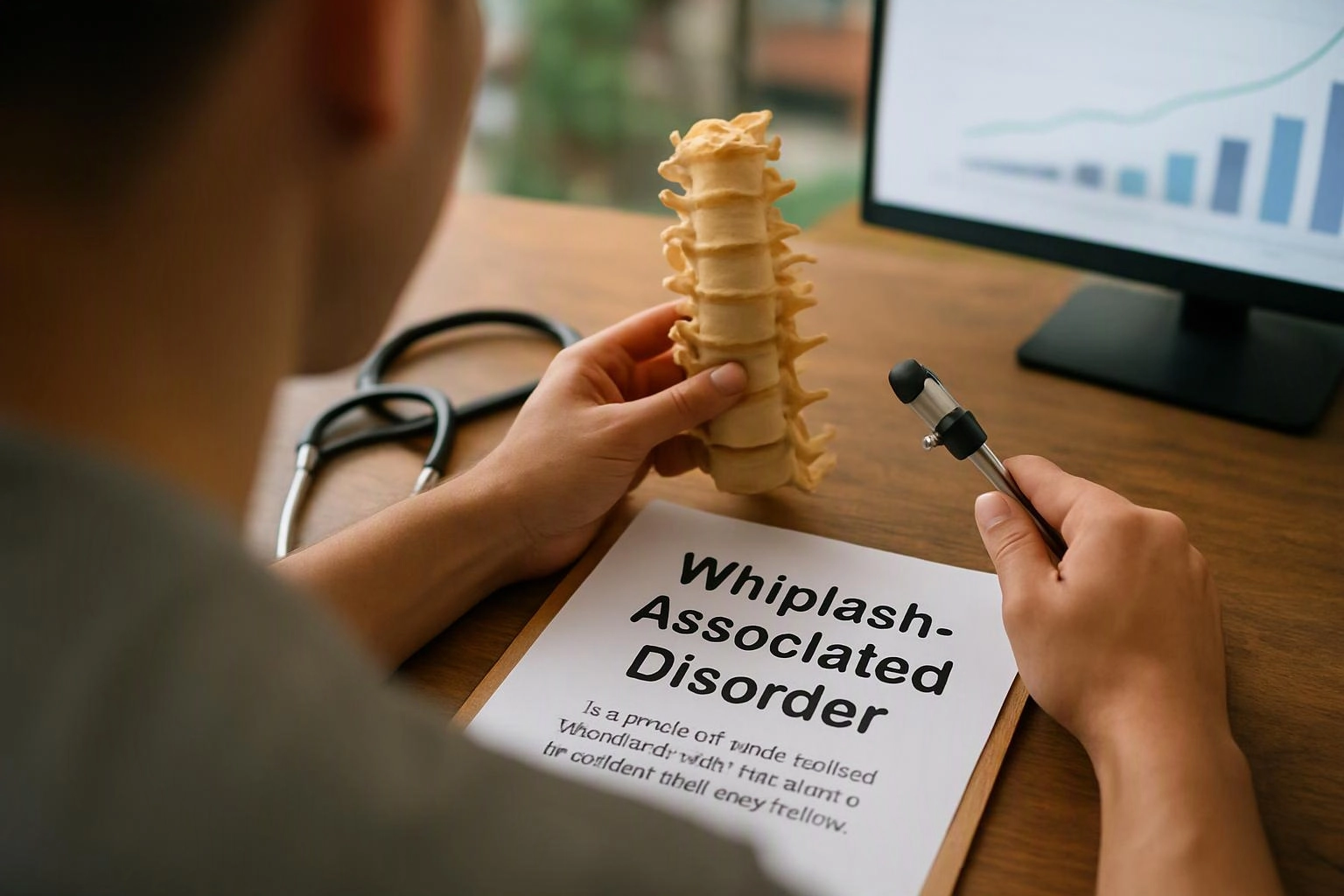
Whiplash-Associated Disorder describes how a sudden force can affect the neck and nearby structures. The head may move quickly while the neck responds, which can disturb normal motion and produce symptoms. The clinical picture may include neck pain, stiffness, headaches, muscle guarding, or reduced range of motion.
Related glossary terms: Cervical Spine, Range Of Motion, Muscle Spasm.
Assessment focuses on the person’s symptoms, movement, tenderness, and functional changes. A clinician also considers how the problem began and whether other conditions could explain the symptoms. Cervical spine movement and muscle spasm may help describe the pattern, but neither term alone defines the disorder.
From the Arrowhead Clinic Chiropractor team
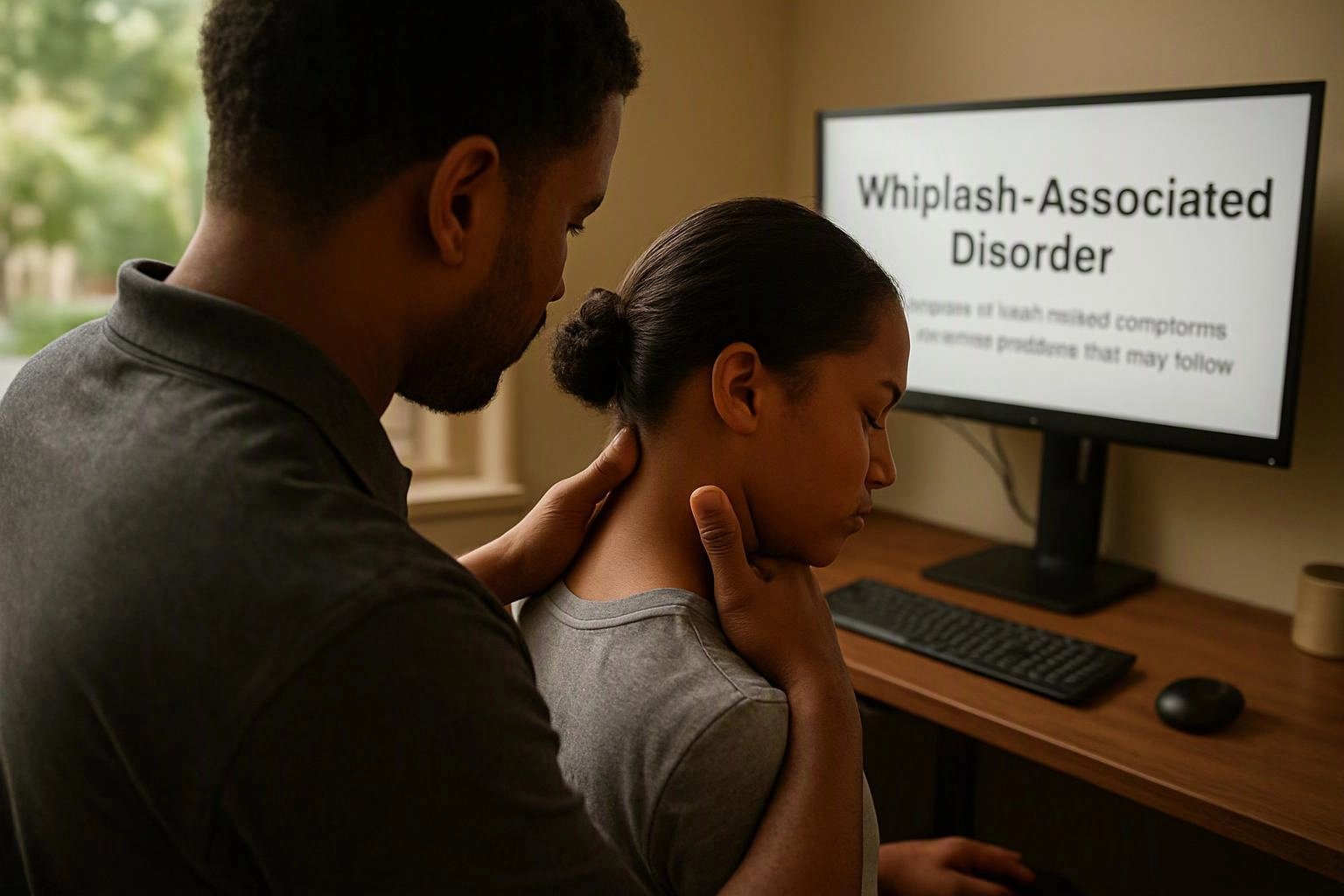
When we assess Whiplash-Associated Disorder, we review how the event occurred and how symptoms affect neck movement. We check range of motion, muscle response, tenderness, and related complaints before planning care within our Whiplash Treatment service.
Whiplash-Associated Disorder in Practice: A Real-World Example
A driver develops neck stiffness, headaches, and difficulty turning the head after a sudden traffic collision. The combined symptoms and movement changes may fit Whiplash-Associated Disorder, even when the main complaint is not severe pain.
Related Services
Related Terms
Cervical Spine
Cervical Spine is the upper section of the vertebral column that supports the head and connects…
Range Of Motion
Range Of Motion is the available movement at a joint, measured by how far a body…
Muscle Spasm
A muscle spasm is an involuntary tightening of muscle tissue that can feel sudden, firm, or…
Facet Joint
A facet joint is a small, paired connection between the back portions of neighboring spinal bones…
Arrowhead Clinic Chiropractor
Have Questions About Whiplash-Associated Disorder?
Contact Arrowhead Clinic Chiropractor for practical guidance on Whiplash-Associated Disorder and related chiropractor work in Atlanta.