
What Is Core Stabilization?
Core Stabilization is a corrective exercise approach that trains the muscles around the abdomen, pelvis, spine, and hips to support controlled movement. The goal is not simply stronger abdominal muscles. The approach develops coordination, endurance, and control so the trunk remains steady while the limbs move during daily activities or exercise.
Quick Facts About Core Stabilization
Category
Corrective exercise method
Used for
Trunk control during movement
Common confusion
Not limited to abdominal exercises
Also called
Core strengthening, Core stability training
Often discussed with
Corrective Exercise Therapy, Posture Correction
Key Takeaways About Core Stabilization
- It focuses on trunk control, not abdominal strength alone.
- Exercises connect breathing, posture, balance, and movement.
- Core stabilization is not the same as performing sit-ups.
How Core Stabilization Works

Core Stabilization works by coordinating the muscles that support the trunk before and during movement. A person may practice holding a neutral spine while moving an arm or leg. The exercise becomes more useful when the trunk stays controlled without excessive bracing, shifting, or breath holding.
Related glossary terms: Anterior Pelvic Tilt, Lumbar Spine, Pelvic Alignment.
Corrective Exercise Therapy may pair core stabilization with posture, balance, and movement drills. The exercise selection depends on the movement being observed and the level of control the person can maintain. Progress is judged by smoother motion, steady alignment, and the ability to repeat the task without losing trunk control. These observations help distinguish improved coordination from simple muscle fatigue.
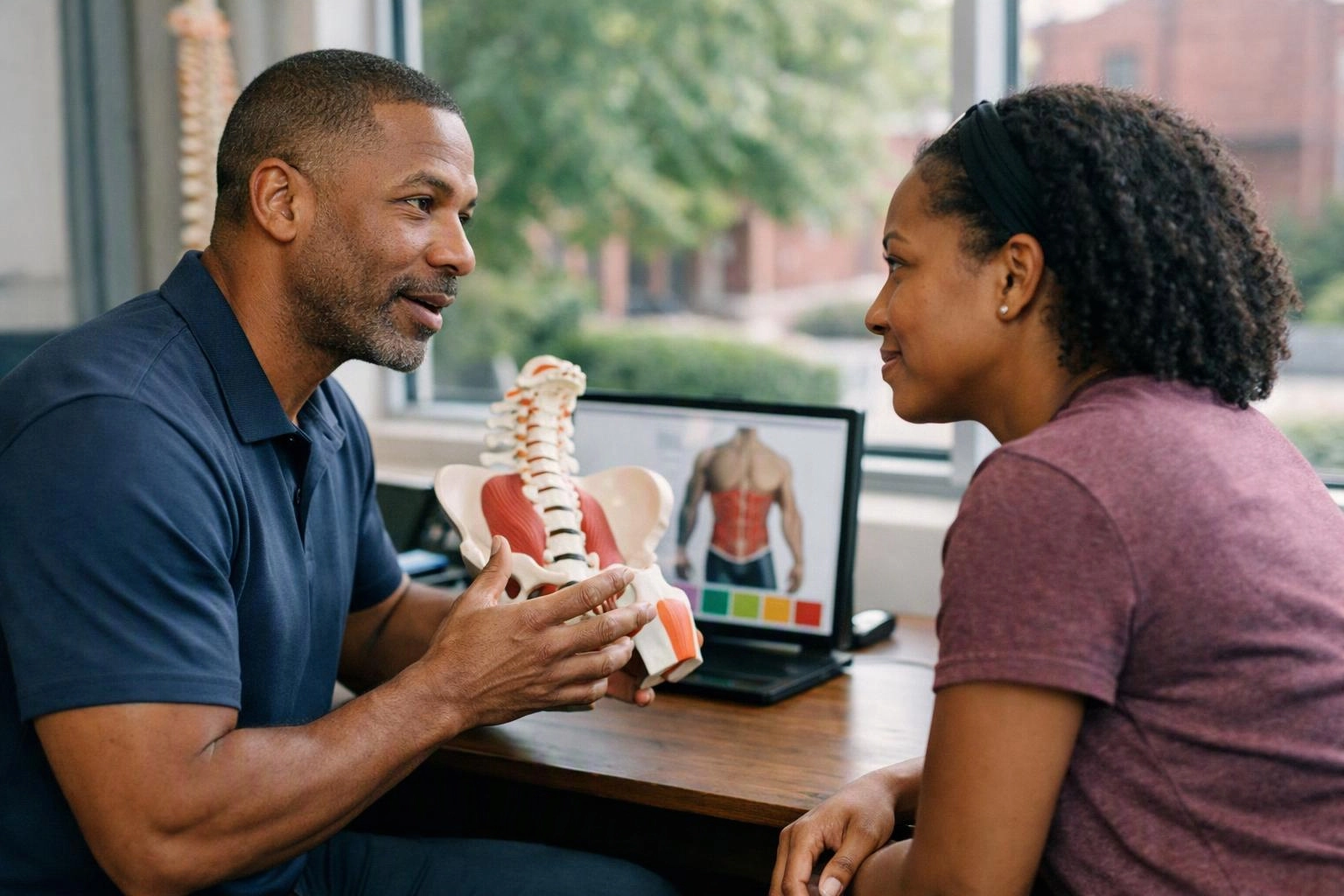
From the Arrowhead Clinic Chiropractor team
When we use Core Stabilization in Corrective Exercise Therapy, we watch how the trunk responds while the arms, legs, and pelvis move. We adjust the exercise when breathing, alignment, or control changes. Our team checks movement quality during the task, not just how many repetitions a person completes.
Core Stabilization in Practice: A Real-World Example
A person with poor trunk control may practice a supported bridge while keeping the pelvis level. The exercise may progress to moving one leg while the spine and pelvis remain steady.
Related Services
Related Terms
Anterior Pelvic Tilt
Anterior Pelvic Tilt is a postural position in which the front of the pelvis rotates forward…
Lumbar Spine
The lumbar spine is the lower section of the vertebral column between the thoracic spine and…
Pelvic Alignment
Pelvic Alignment is the relationship among the pelvis, sacrum, hips, and lower spine as they support…
Range Of Motion
Range Of Motion is the available movement at a joint, measured by how far a body…
Arrowhead Clinic Chiropractor
Have Questions About Core Stabilization?
Contact Arrowhead Clinic Chiropractor for practical guidance on Core Stabilization and related chiropractor work in Atlanta.