
What Are Growth Plates?
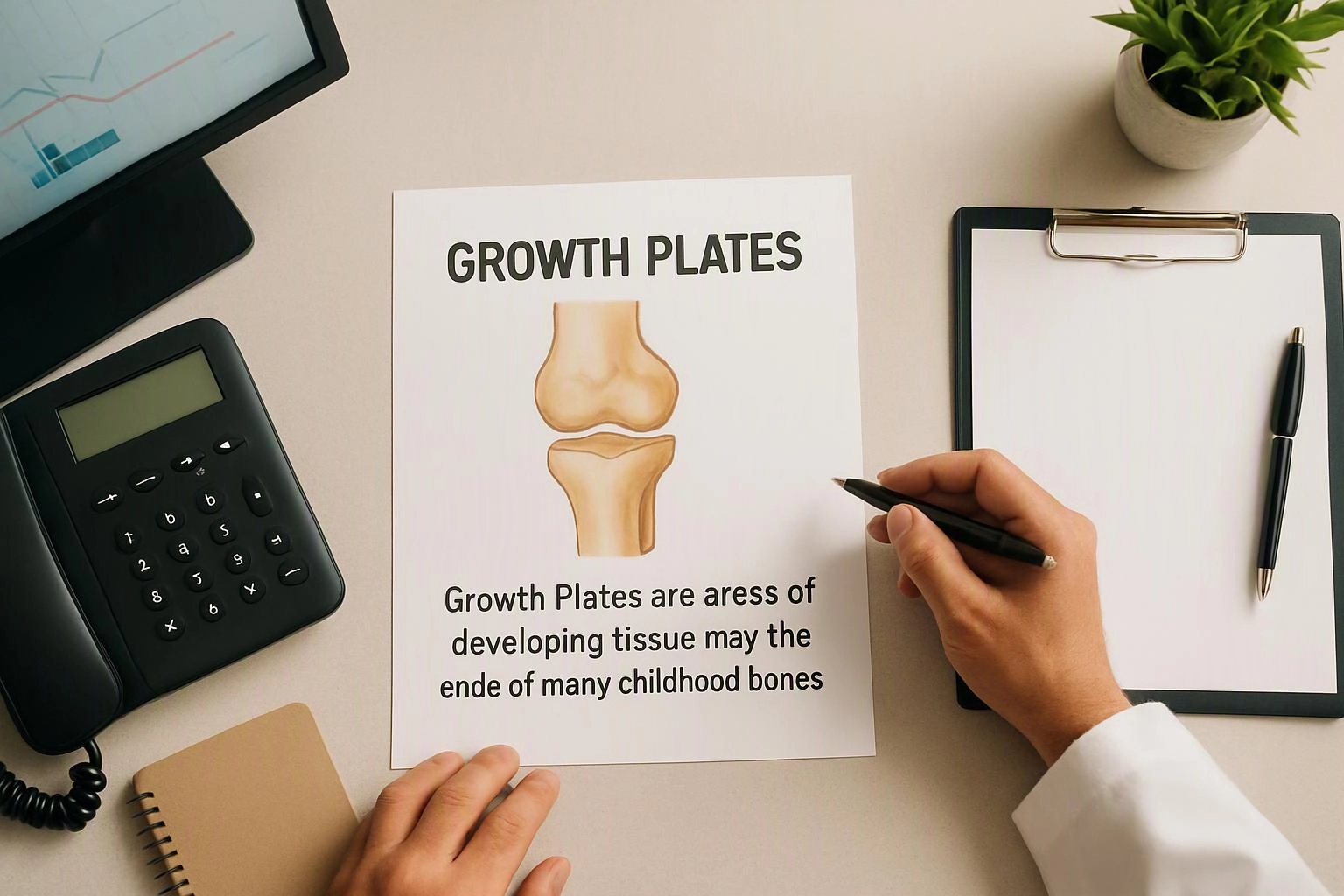
Growth Plates are areas of developing tissue near the ends of many childhood bones. These regions allow bones to lengthen as a child grows and gradually change into solid bone after skeletal growth ends. Their condition helps clinicians understand physical development and select age-appropriate approaches during pediatric health assessments.
Quick Facts About Growth Plates
Category
Childhood skeletal anatomy
Used for
Understanding bone development
Common confusion
Often mistaken for joints
Also called
Epiphyseal plates, Physeal plates
Often discussed with
Pediatric Chiropractic Care
Key Takeaways About Growth Plates
- Growth plates contain developing tissue, not fully formed adult bone.
- Their location helps guide age-appropriate pediatric care.
- Growth plates are not the same as joints or spinal discs.
How Growth Plates Works
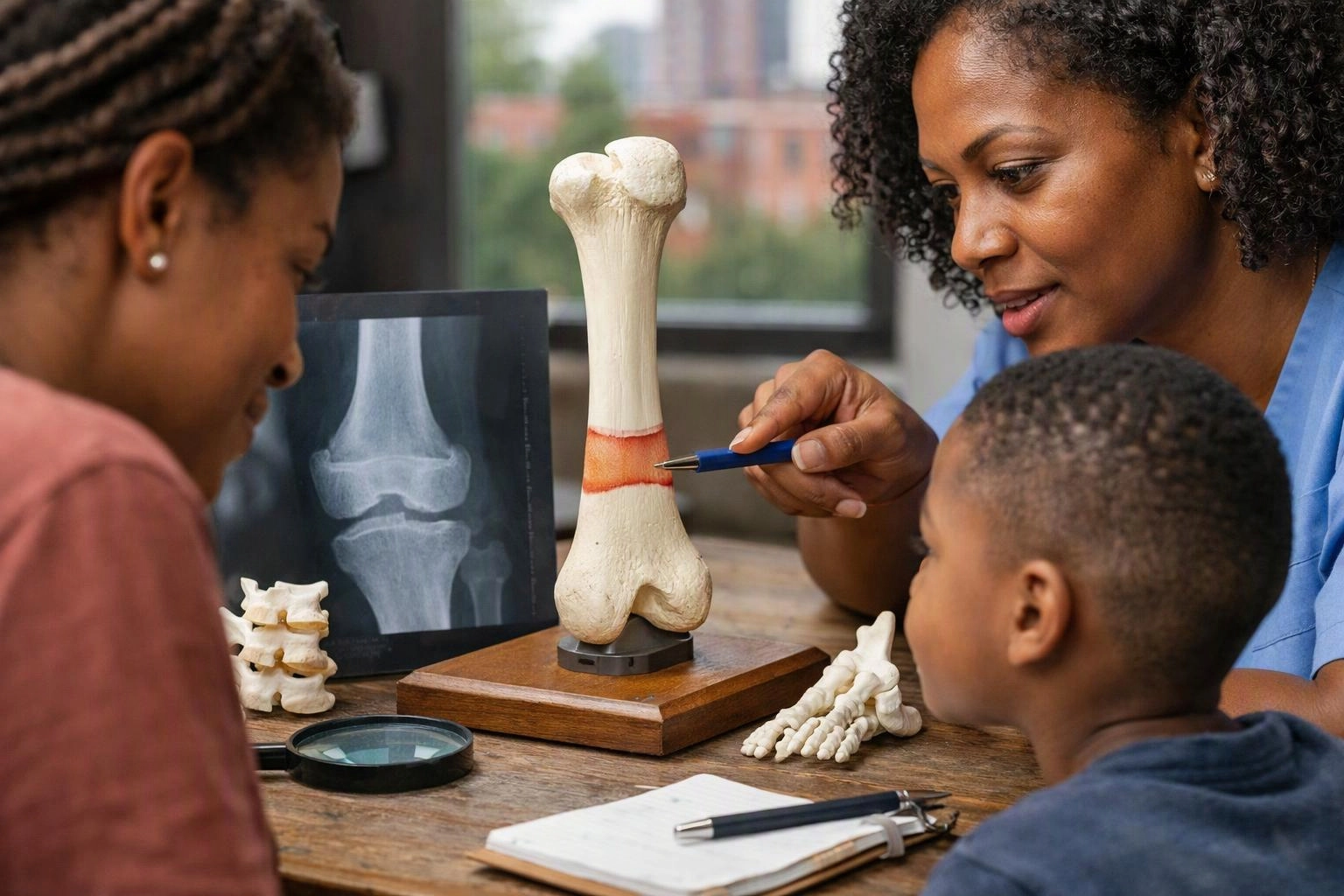
Growth Plates are zones of developing cartilage near the ends of many growing bones. New tissue forms in these zones and gradually changes into bone, which allows the bone to lengthen. This process supports normal skeletal development during childhood and adolescence.
Related glossary terms: Range Of Motion, Spinal Stenosis, Vertebral Disc.
Healthcare professionals consider growth plates when they assess a child’s movement, posture, or musculoskeletal concerns. A developing skeleton responds differently from a mature skeleton, so the child’s stage of growth helps shape the assessment. Pediatric Chiropractic Care focuses on age-appropriate observation and gentle clinical methods. Growth plates are separate from the joints that connect bones and from the discs between spinal bones. Their location and development can vary among bones, so an assessment considers the whole child rather than one area alone.
From the Arrowhead Clinic Chiropractor team
When we assess a child through pediatric chiropractic care, we consider skeletal development alongside posture, movement, and the reason for the visit. We use that context to keep our clinical approach age appropriate. Growth plates help us remember that a child’s musculoskeletal system is still developing.
Growth Plates in Practice: A Real-World Example
A child visits for a movement or posture concern during an active growth period. The clinician considers developing growth plates when selecting an age-appropriate assessment and discussing the child’s musculoskeletal presentation with the parent or guardian.
Related Services
Related Terms
Range Of Motion
Range Of Motion is the available movement at a joint, measured by how far a body…
Spinal Stenosis
Spinal Stenosis is a narrowing of the spaces within the spine that can reduce room for…
Vertebral Disc
A vertebral disc is a flexible structure between neighboring spinal bones that cushions movement and helps…
Arrowhead Clinic Chiropractor
Have Questions About Growth Plates?
Contact Arrowhead Clinic Chiropractor for practical guidance on Growth Plates and related chiropractor work in Atlanta.