
What Is Anterior Pelvic Tilt?
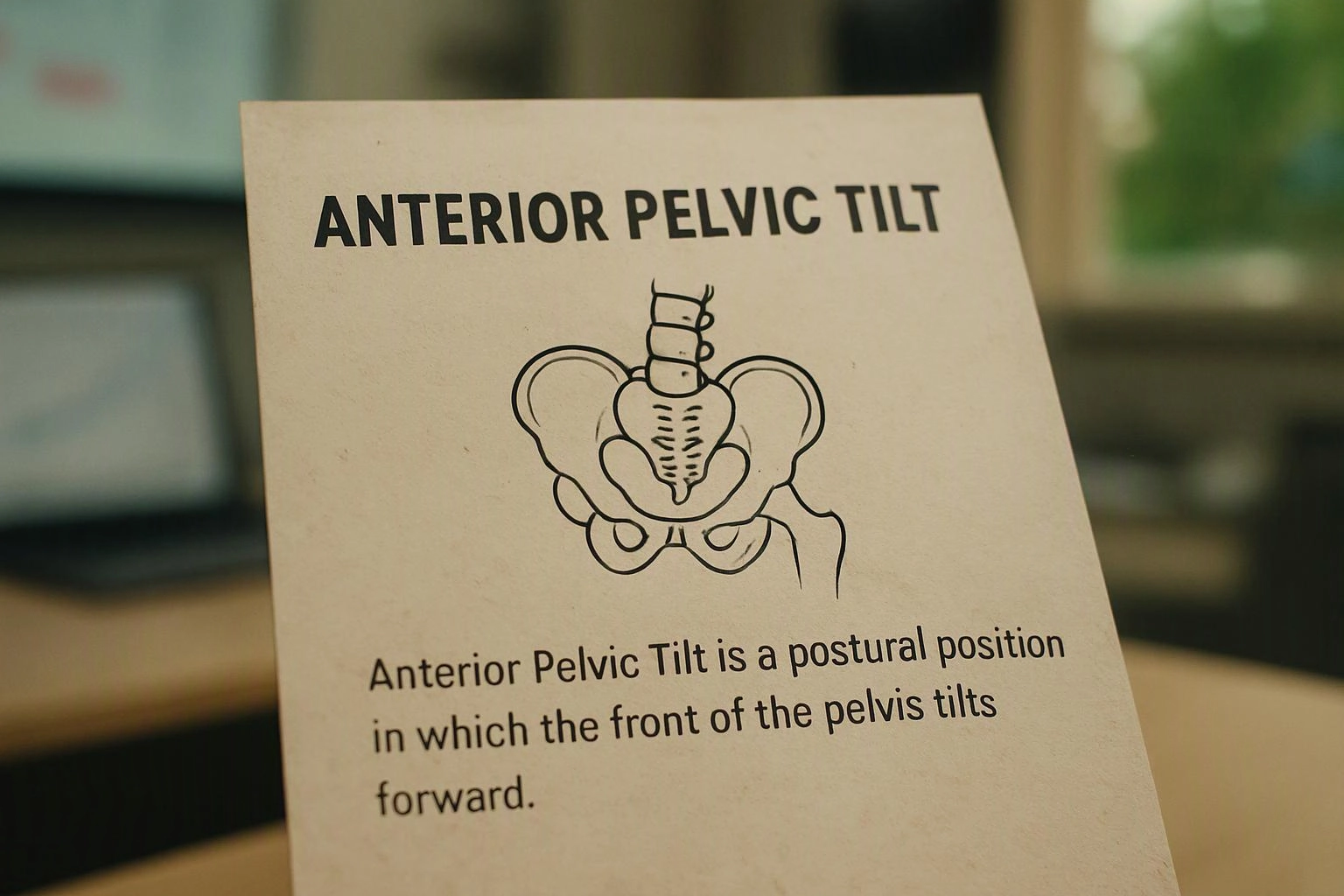
Anterior Pelvic Tilt is a postural position in which the front of the pelvis rotates forward and the back of the pelvis rises. This position often increases the inward curve of the lower back and changes how the hips, abdomen, and lower spine line up. It describes alignment, not a diagnosis by itself.
Quick Facts About Anterior Pelvic Tilt
Category
Postural alignment pattern
Used for
Posture assessment and movement planning
Common confusion
Not identical to low-back pain
Also called
Anterior pelvic rotation, Forward pelvic tilt
Often discussed with
Posture Correction
Key Takeaways About Anterior Pelvic Tilt
- The pelvis rotates forward relative to the trunk and legs.
- Posture assessment considers the pelvis, hips, spine, and movement together.
- Anterior pelvic tilt is not the same as lower-back pain.
How Anterior Pelvic Tilt Works
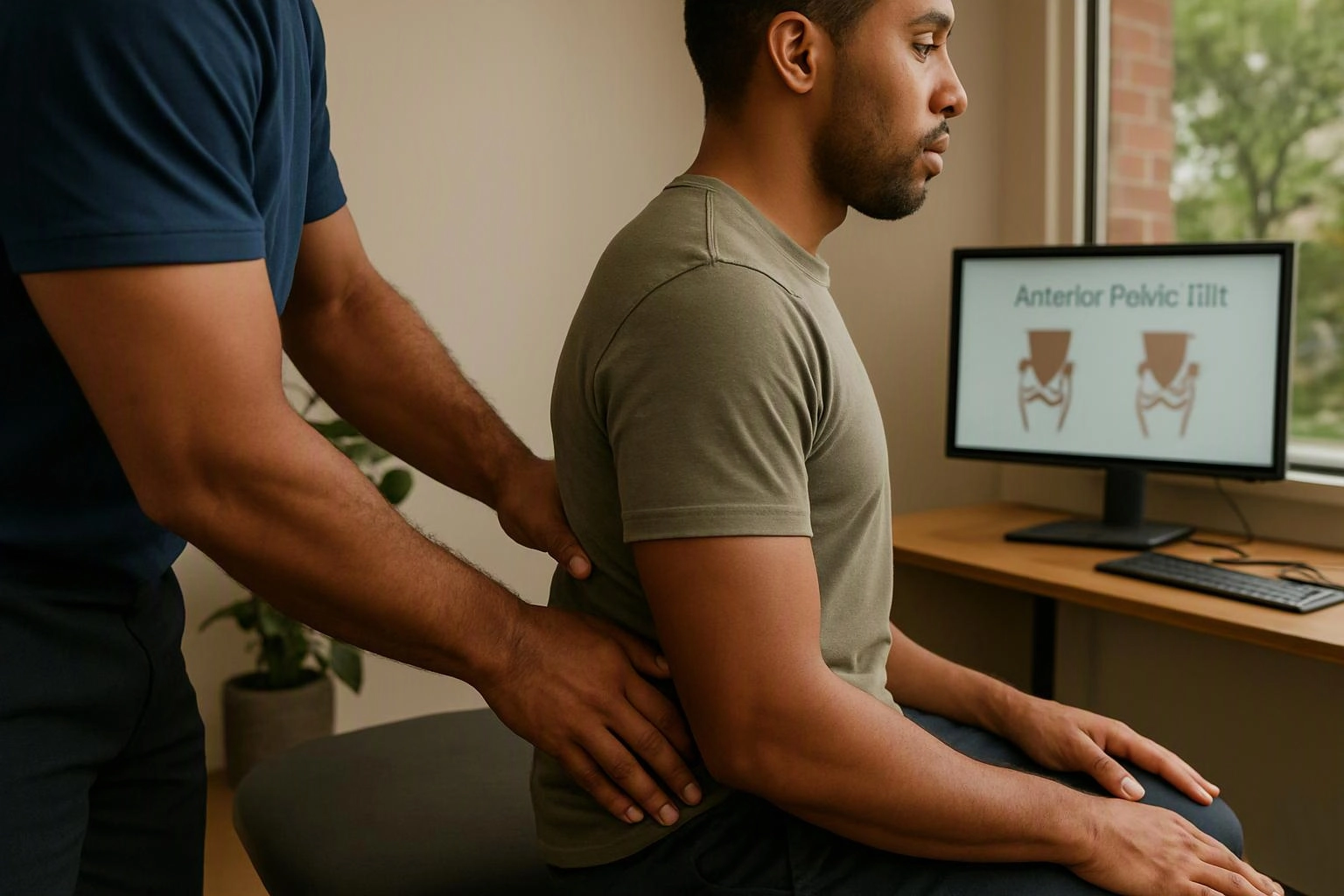
Anterior Pelvic Tilt describes the pelvis tipping forward around the hip joints. That position can increase the inward curve of the lumbar spine and shift the balance of the trunk over the legs. The amount of tilt can change with standing posture, sitting habits, muscle control, and movement demands.
Related glossary terms: Pelvic Alignment, Lumbar Spine, Forward Head Posture.
A posture assessment looks at the pelvis in relation to the ribs, hips, knees, and feet. A practitioner may observe standing alignment, walking, bending, and controlled movement to see whether the position remains fixed or changes with motion. This distinction helps separate a resting posture pattern from a movement strategy.
Practical distinction
Anterior pelvic tilt is an alignment description, not a diagnosis or a symptom by itself. Some people show the pattern without discomfort, while others notice stiffness or strain during certain activities. Assessment should consider the whole movement pattern instead of judging the pelvis from one view alone.
From the Arrowhead Clinic Chiropractor team
When we assess Anterior Pelvic Tilt, we observe standing posture and movement together. We also consider hip motion, lower-back position, and muscle control before planning posture correction work. Our team treats the finding as part of a broader movement assessment, not as a diagnosis by itself.
Anterior Pelvic Tilt in Practice: A Real-World Example
During a posture correction visit, a person may stand with the front of the pelvis tipped forward and the lower back more arched. The practitioner may compare that standing position with walking and bending to see how the alignment changes.
Related Services
Related Terms
Pelvic Alignment
Pelvic Alignment is the relationship among the pelvis, sacrum, hips, and lower spine as they support…
Lumbar Spine
The lumbar spine is the lower section of the vertebral column between the thoracic spine and…
Forward Head Posture
Forward Head Posture is a postural pattern in which the head rests ahead of the shoulders…
Core Stabilization
Core Stabilization is a corrective exercise approach that trains the muscles around the abdomen, pelvis, spine…
Arrowhead Clinic Chiropractor
Have Questions About Anterior Pelvic Tilt?
Contact Arrowhead Clinic Chiropractor for practical guidance on Anterior Pelvic Tilt and related chiropractor work in Atlanta.