Shoulder or Knee Pain: When to Consider Chiropractic Evaluation
Chiropractic evaluation assesses shoulder pain, knee pain, movement limitations, and suitability for chiropractic care. Arrowhead Clinic Chiropractor assesses joint function, movement patterns, and warning signs to determine whether chiropractic care and corrective exercise therapy are appropriate.
Request an Estimate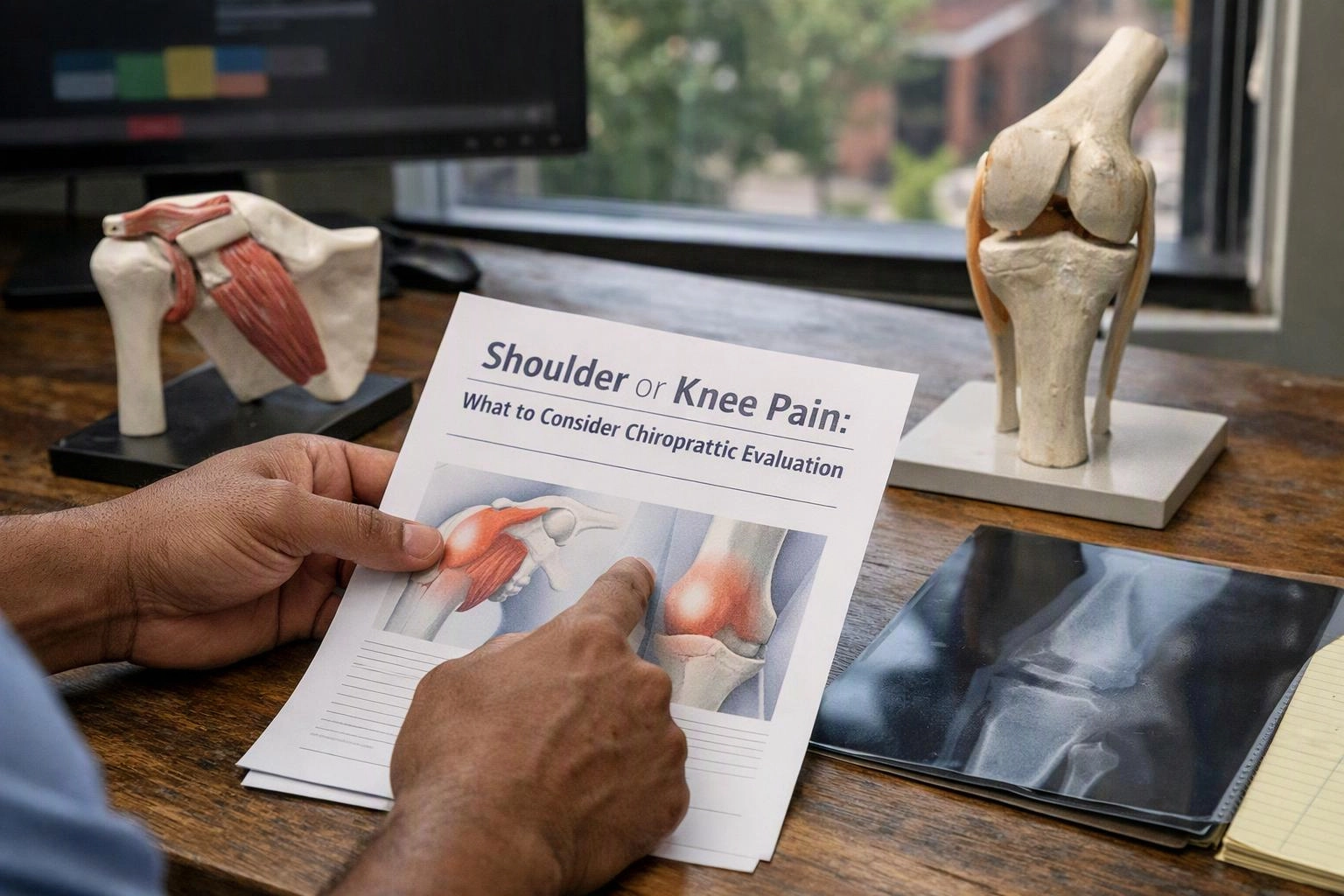
Can a Chiropractor Help With Shoulder or Knee Pain?
Yes, chiropractic care may help some shoulder and knee pain when symptoms relate to movement, joint mechanics, surrounding muscles, or load tolerance. Serious or unexplained symptoms require appropriate medical evaluation.
Our approach focuses on the musculoskeletal system and how each joint works with nearby areas. Shoulder discomfort may involve the shoulder joint, rotator cuff, neck, or upper back. Knee discomfort may involve the knee joint, hip, ankle, or lower-limb alignment.
We use the findings to decide whether chiropractic care fits your needs. Our Shoulder Pain Treatment approach is based on the cause, the pain pattern, and your ability to move safely.
Signs That Shoulder or Knee Pain Deserves an Evaluation
Shoulder or knee pain deserves an evaluation when symptoms change how you move, work, exercise, or rest. These signs help us decide whether a movement assessment is appropriate.
Common Causes of Shoulder and Knee Pain
Shoulder and knee pain can develop from repeated stress, a sudden event, or changes in how the body moves. We look for the cause that best matches your symptoms and injury history.
Common examples include rotator cuff irritation, shoulder stiffness, patellofemoral pain, knee stiffness, and other movement-related joint pain. The same symptom can have different causes, so our assessment does not rely on pain location alone.
When Shoulder or Knee Pain Needs Medical Attention First
Shoulder or knee pain needs medical attention first when red flags suggest a traumatic injury, fracture, dislocation, infection, or another condition that requires medical care.
Seek prompt medical evaluation for severe swelling, major loss of strength, new numbness, a visible deformity, fever with joint pain, or an inability to use the arm or leg. We use these warning signs as part of our injury evaluation and can recommend medical referral when chiropractic care is not the right first step.
Do not delay medical care to try manual therapy when pain follows a serious accident or when symptoms are rapidly worsening.
What We Check During a Chiropractic Evaluation
Arrowhead Clinic Chiropractor checks your health history, pain pattern, range of motion, joint mechanics, muscle function, posture, and movement quality during a chiropractic evaluation.
We ask what started the problem, which activities increase symptoms, and whether the pain travels or changes with position. Our movement assessment then looks at how the shoulder, knee, and connected joints work together.
These findings help us connect the evaluation to care recommendations. Recommendations may include chiropractic care, corrective exercise therapy, medical referral, or a combination of appropriate next steps.
How Shoulder Pain Is Evaluated
Shoulder pain evaluation checks the shoulder joint, rotator cuff function, scapular movement, neck and upper-back mechanics, and shoulder range of motion.
We compare comfortable and painful movements while noting control, strength, and changes in posture. This helps us separate a local shoulder problem from movement limits connected to the neck or upper back.
How Knee Pain Is Evaluated
Knee pain evaluation checks the knee joint, patella movement, hip function, ankle mobility, gait, and lower-limb alignment.
We observe how the leg handles walking, bending, and other relevant movements. This can show whether the knee is carrying extra load because of limited mobility or reduced control elsewhere in the lower limb.
How Chiropractic Care May Support Shoulder and Knee Recovery
Chiropractic care may support shoulder and knee recovery by improving mobility, joint function, soft-tissue movement, and control during daily activity.
Our care may include manual therapy for restricted areas and guidance for corrective exercise therapy. Exercise selection depends on your movement findings, strength, symptoms, and activity tolerance.
Shoulder pain treatment and knee pain treatment also require load management. We help you understand which movements may need modification while your body builds tolerance and control.
Care is adjusted as your movement changes. We monitor pain with movement, joint stiffness, and function so the plan remains connected to your goals.
Prevention Steps for Recurring Shoulder or Knee Pain
Recurring shoulder or knee pain is easier to manage when movement quality, strength, and recovery habits support the demands of your activity.
What to Expect When You Contact Arrowhead Clinic Chiropractor
Contacting Arrowhead Clinic Chiropractor begins with an initial consultation focused on your symptoms, movement limits, and care goals.
Bring a list of activities that increase symptoms and any relevant medical or injury information. Contact us through our contact page to discuss the next step.
How to Decide Whether to Schedule an Evaluation
Schedule a chiropractic evaluation when shoulder or knee pain is persistent, recurrent, linked to an injury history, or limiting normal activity.
A movement-related problem may be suitable for chiropractic care when symptoms are stable and no red flags are present. Our team reviews the findings before recommending care, so you do not have to decide based on pain location alone.
When symptoms suggest a condition outside our scope, we explain the referral decision and help you identify the appropriate next step. Arrowhead Clinic Chiropractor is ready to discuss your shoulder pain or knee pain and determine whether an evaluation fits your needs.
Questions About Shoulder or Knee Pain Evaluations
Can chiropractic care help shoulder pain from overuse?
Yes, chiropractic care may help shoulder pain from overuse when symptoms relate to joint mechanics, mobility, muscle function, or activity load. Arrowhead Clinic Chiropractor evaluates the shoulder and connected areas before recommending manual therapy, exercise, or other care.
Can a chiropractor evaluate knee pain after an injury?
Yes, a chiropractor can evaluate knee pain after an injury when the symptoms are appropriate for a musculoskeletal assessment and no red flags are present. We check the injury history, swelling, strength, range of motion, gait, and lower-limb movement before deciding whether care or medical referral is appropriate.
What should I bring to a chiropractic evaluation for joint pain?
Bring relevant medical information, details about your injury history, and a clear description of the activities that increase or reduce your joint pain. Information about prior imaging, treatment, medications, and changes in movement can also help us understand your symptoms.
Can shoulder or knee pain come from a problem in another joint?
Yes, shoulder or knee pain can be influenced by movement limits or muscle function in nearby joints. We assess connected areas such as the neck, upper back, hip, and ankle to understand how the full movement pattern may affect the painful joint.
Related Resources
Chiropractic Cost Factors: What to Ask Before You Book
Compared ToChiropractor vs. Physical Therapist: Which Provider Fits Your Needs?
What Goes With ItDry Needling and Chiropractic Care: Different Approaches, One Treatment Plan
Compared ToChiropractic Payment Plans vs. Visit Packages: Questions to Ask