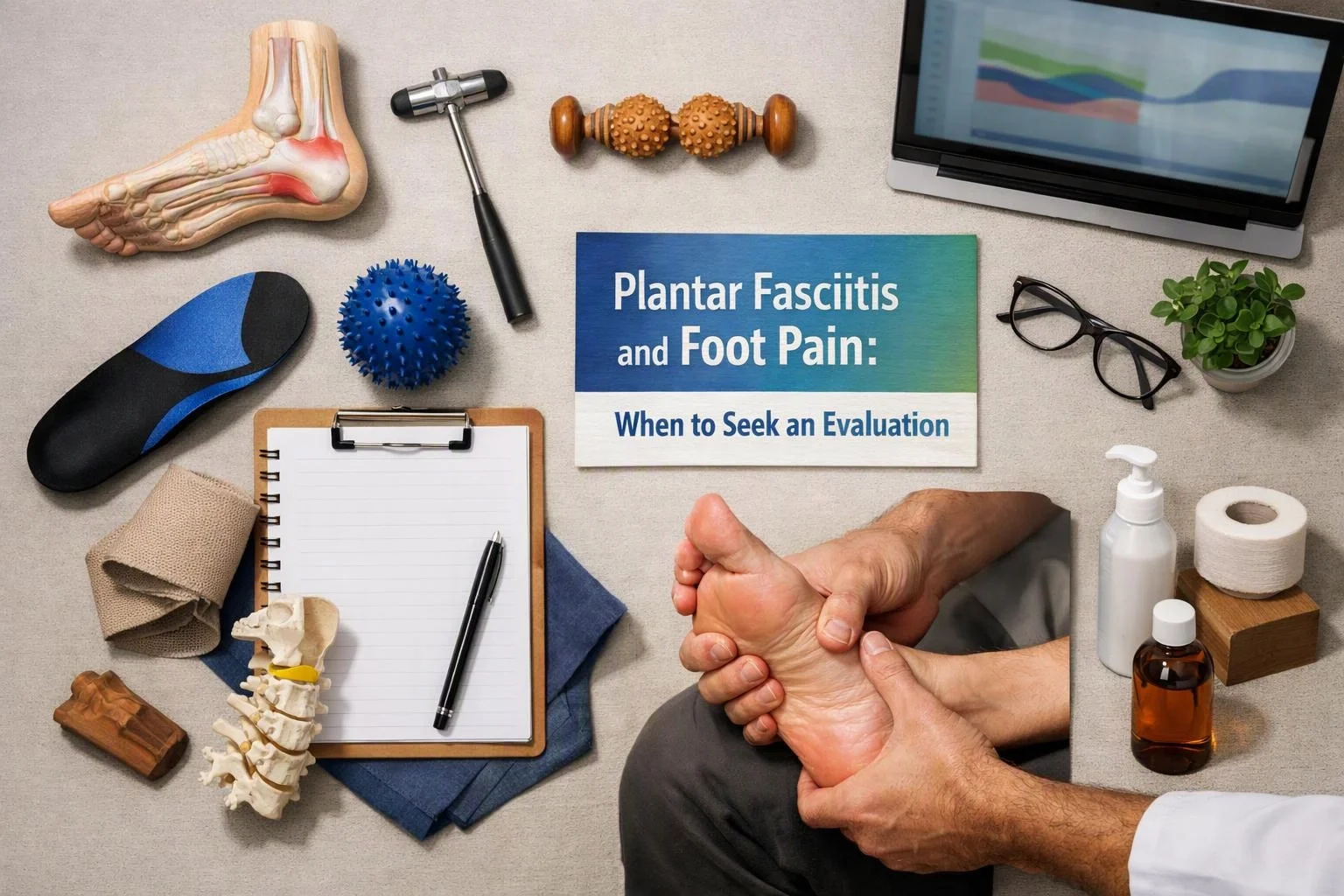
Plantar Fasciitis and Foot Pain: When to Seek an Evaluation
Plantar fasciitis and foot pain deserve an evaluation when heel pain persists, limits movement, worsens, or includes concerning symptoms; Arrowhead Clinic Chiropractor assesses movement, foot mechanics, and related tissues to guide care.
Request an EstimateWhat Does Plantar Fasciitis Feel Like?
Plantar fasciitis commonly feels like sharp or aching pain under the heel or along the arch, especially with initial steps after rest. The pain may change as you continue walking, standing, or placing weight on the foot.
These symptoms can occur with plantar heel pain, medial arch pain, or other foot conditions. A clinical evaluation helps connect the symptom pattern with the tissues and movements involved.
What Causes Plantar Fasciitis and Foot Pain?
Foot mechanics and repeated loading can contribute to plantar fasciitis and foot pain. The plantar fascia may become irritated when the foot, ankle, and lower limb do not share force efficiently.
These factors do not affect every person in the same way. We review your movement pattern and symptom history to identify which factors may be contributing to your pain.
How Can Foot Pain Be Related to How You Move?
Foot pain can be related to how you move because gait, ankle motion, and lower-limb alignment influence how force reaches the foot. A walking pattern with excessive pronation or reduced ankle mobility may change the load placed on the plantar fascia.
Hip mobility can also affect lower-limb alignment during walking and other activities. We assess these connected movements so care addresses contributing mechanics, not only the painful area.
Our approach may include a gait assessment, range of motion checks, and observation of how the foot responds during basic movements.
When Should Heel Pain Be Evaluated?
Persistent heel pain should be evaluated when it continues, worsens, returns repeatedly, limits normal activity, or follows an injury. An evaluation can help clarify whether the symptoms fit plantar fasciitis or another source of foot pain.
Activity limitation matters even when the pain seems manageable. We also consider red flags, changes in walking, and symptoms that do not follow a usual pattern.
Seeking care early can help you understand the contributing movement factors and choose a conservative plan that matches your needs.
How We Evaluate Plantar Fasciitis and Foot Pain
Arrowhead Clinic Chiropractor evaluates plantar fasciitis and foot pain by reviewing symptoms, examining movement, and considering whether another condition may explain the pain.
We begin with your health history and symptom pattern. We ask about pain after rest, walking pain, standing pain, activity changes, and any injury connected with the onset of symptoms.
Our team may observe gait, check range of motion, and complete a foot and ankle examination. We also consider the calf, hip, lower-limb alignment, and related soft tissue.
This chiropractic evaluation helps guide differential considerations. If your findings suggest a condition outside our scope of care, we explain the appropriate referral considerations.
Can a Chiropractor Help With Plantar Fasciitis?
Yes, chiropractic care may help plantar fasciitis when treatment addresses contributing movement restrictions, tissue irritation, and loading patterns alongside home exercises.
Our Plantar Fasciitis Treatment may include manual therapy, joint mobility work, and soft tissue care when those approaches fit the evaluation.
We also use corrective exercise therapy to support movement control and gradual tolerance for daily activity. Care is adjusted according to your symptoms, examination findings, and treatment goals.
What Treatment May Help Foot Pain?
Plantar Fasciitis Treatment may combine hands-on care, movement retraining, activity guidance, and Corrective Exercise Therapy based on the evaluation. Foot Pain Treatment follows the same principle of matching care to the likely source of symptoms.
We may recommend mobility work for the ankle and calf, strengthening for the foot and lower limb, and activity modification that reduces aggravating loads. Home care supports the progress made during visits.
Corrective Exercise Therapy may focus on foot control, calf flexibility, balance, and movement quality. We explain each exercise and monitor how your symptoms respond.
How Can You Reduce Strain on the Plantar Fascia?
Reducing strain on the plantar fascia involves managing activity, supporting comfortable movement, and allowing recovery between demanding activities. These steps can support care, but they do not replace an evaluation when symptoms persist.
We can help you connect these choices with your gait, ankle mobility, and activity demands. Stop an exercise that causes sharp or worsening pain and discuss the response during an evaluation.
When Does Foot Pain Need Prompt Medical Attention?
Foot pain needs prompt medical attention when severe symptoms, inability to bear weight, significant swelling, neurological changes, fever, or an acute injury are present.
Major swelling, bruising, numbness, or weakness can point to an injury or condition that needs timely medical assessment. Fever with foot pain also needs prompt attention.
We can help assess musculoskeletal concerns, but urgent symptoms may require medical evaluation before conservative chiropractic care.
What Happens After the Evaluation?
The evaluation leads to a care plan based on your symptoms, movement findings, and treatment goals. We explain what we found and how each part of the plan supports your daily activities.
Arrowhead Clinic Chiropractor offers Free Consultations for people who want to discuss their symptoms and next steps. Contact our team through our contact page.
Questions About Plantar Fasciitis and Foot Pain
Can plantar fasciitis go away without treatment?
Plantar fasciitis can improve without formal treatment when contributing activity and movement factors settle, but persistent or recurring symptoms deserve an evaluation. Arrowhead Clinic Chiropractor can review the pain pattern and help you decide whether conservative care is appropriate.
Is plantar fasciitis caused by flat feet?
Flat feet can influence foot mechanics, but plantar fasciitis is not explained by foot shape alone. We assess gait, pronation, ankle mobility, lower-limb alignment, and activity demands to understand the factors affecting your symptoms.
What conditions can feel like plantar fasciitis?
Several foot, ankle, nerve, and soft-tissue conditions can cause heel pain or arch pain that resembles plantar fasciitis. The symptom location, onset, injury history, examination findings, and neurological signs help guide differential considerations.
Should I stop exercising when plantar fasciitis hurts?
You should modify or pause activities that clearly worsen plantar fasciitis pain, especially when walking becomes difficult or symptoms continue afterward. We can help adjust activity, strengthening, and recovery based on your response.
Related Resources
Chiropractic Cost Factors: What to Ask Before You Book
Compared ToChiropractor vs. Physical Therapist: Which Provider Fits Your Needs?
What Goes With ItDry Needling and Chiropractic Care: Different Approaches, One Treatment Plan
Compared ToChiropractic Payment Plans vs. Visit Packages: Questions to Ask