Numbness and Tingling: When to Get a Nerve-Related Symptom Evaluated
Numbness and tingling need evaluation when symptoms persist, worsen, spread, or occur with weakness or other warning signs; Arrowhead Clinic Chiropractor assesses possible nerve-related causes and explains whether chiropractic care may fit.
Request an EstimateWhat Do Numbness and Tingling Feel Like?
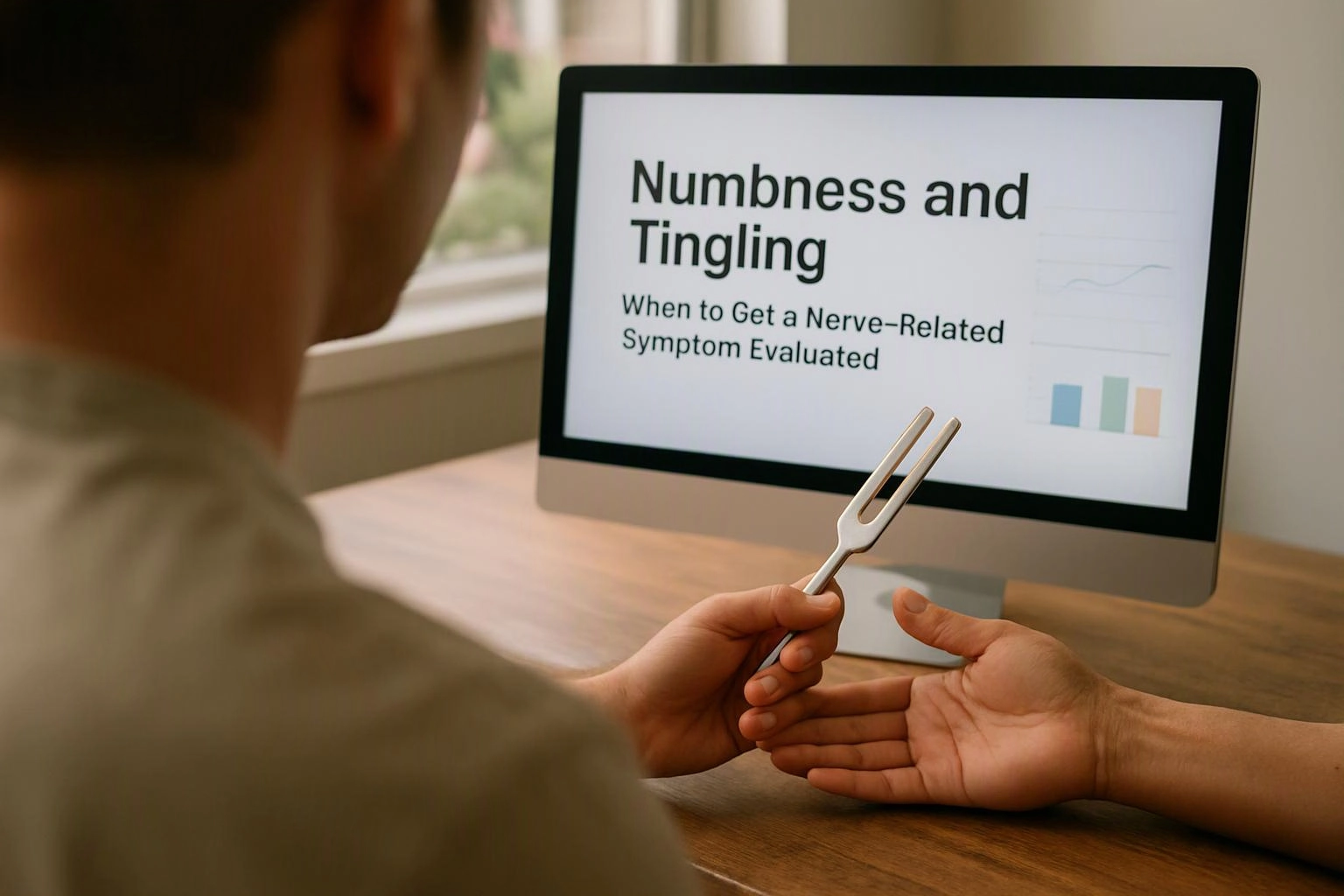
Numbness and tingling are altered sensations that can affect the hands, feet, fingers, toes, or another body area. The feeling may come and go, stay in one place, or follow a nerve pathway.
What Can Cause Numbness or Tingling in the Hands and Feet?
Numbness or tingling in the hands and feet can come from nerve compression, nerve irritation, medical conditions, or medication effects. The location and symptom pattern help guide the next step.
Our team considers whether symptoms fit spinal involvement or a condition affecting nerves farther from the spine. Common causes include:
Carpal tunnel symptoms, radiculopathy, and sciatic nerve symptoms can also create a recognizable distribution of altered sensation. A physical examination helps separate a musculoskeletal pattern from a condition that needs medical evaluation.
When Should Numbness or Tingling Be Evaluated?
Numbness or tingling should be evaluated when symptoms persist, worsen, spread, follow an injury, or occur with weakness, coordination changes, or other sudden neurological symptoms.
Persistent symptoms deserve attention even when they are mild. Worsening symptoms, spreading numbness, muscle weakness, loss of coordination, or changes in walking can signal a need for medical evaluation.
We review symptom onset, location, triggers, and progression to decide whether the pattern appears musculoskeletal or needs medical referral.
Which Warning Signs Need Prompt Medical Attention?
Sudden numbness with weakness, facial changes, speech difficulty, severe headache, or loss of bladder or bowel control needs prompt medical attention rather than routine chiropractic evaluation.
These warning signs can point to a serious neurological problem. Seek urgent medical help when any of the following occur:
Can a Chiropractor Help With Neuropathy Symptoms?
Yes, chiropractic care may help when symptoms relate to musculoskeletal irritation or nerve compression, but neuropathy symptoms can have medical causes that require appropriate medical evaluation.
We use a neurological screening to look for movement limits, muscle changes, and signs of nerve compression. Chiropractic Adjustment may be appropriate when spinal alignment and surrounding tissues appear connected to the symptoms.
Peripheral neuropathy may require medical care for an underlying condition. Our team explains when our Neuropathy Treatment approach may fit and when medical referral is the safer pathway.
How Arrowhead Clinic Chiropractor Evaluates Nerve-Related Symptoms
Arrowhead Clinic Chiropractor reviews the symptom pattern, checks movement and neurological function, uses X-Ray Imaging when clinically appropriate, and explains whether Chiropractic Adjustment or Neuropathy Treatment is suitable; our team offers Free Consultations, upfront pricing, and same-day service.
We begin with a symptom history that covers onset, location, aggravating activities, and changes over time. Our physical examination may include neurological screening, range of motion, strength testing, and sensation testing.
X-Ray Imaging can help us assess spinal structure when the clinical findings support it. We discuss what the findings mean, outline the care pathway, and make a clinical referral when symptoms do not fit chiropractic care.
What Is the Difference Between Nerve Compression and Peripheral Neuropathy?
Nerve compression usually affects a specific nerve pathway, while peripheral neuropathy often affects multiple peripheral nerves and may have a broader medical cause.
| Feature | Nerve compression | Peripheral neuropathy |
|---|---|---|
| Main nerves involved | Often one spinal nerve or a nearby nerve | Peripheral nerves outside the brain and spinal cord |
| Symptom distribution | Often follows a specific path into an arm, hand, leg, or foot | May affect both hands, both feet, or several areas |
| Possible underlying causes | Joint changes, tissue irritation, posture, or injury | Metabolic conditions, medication effects, or other medical causes |
| Care pathway | May include musculoskeletal care after examination | Often requires medical evaluation and coordinated care |
The table provides a starting framework, not a diagnosis. We compare the distribution and behavior of symptoms with examination findings before recommending care.
What Can You Do to Reduce Nerve-Related Symptom Triggers?
Reducing pressure and improving daily movement habits may lower some nerve-related symptom triggers, but these steps do not replace evaluation for persistent or worsening symptoms.
How Do You Decide Whether Chiropractic Care Is Appropriate?
Chiropractic care is more appropriate when the evaluation suggests a musculoskeletal source without urgent warning signs, while unexplained, progressive, or systemic symptoms require medical coordination.
We consider symptom onset, symptom location, symptom pattern, movement limits, strength, sensation, and other musculoskeletal findings. Red flags change the care pathway and may require medical referral.
Neuropathy treatment is not one universal plan. Our team explains whether Chiropractic Adjustment, supportive care, Neuropathy Treatment, or medical coordination best matches the findings.
What Should You Bring to a Numbness and Tingling Evaluation?
A numbness and tingling evaluation is more useful when you bring a clear record of the symptom timeline and relevant health information.
These details help our team compare your history with the physical examination and neurological screening.
How Can You Arrange an Evaluation for Numbness and Tingling?
Arrowhead Clinic Chiropractor can review your symptoms during a Free Consultation and explain the next step, including whether our Neuropathy Treatment approach, Chiropractic Adjustment, X-Ray Imaging, or medical referral fits your findings.
Contact us with the main symptom, affected body area, and any warning signs you have noticed. We will use that information to guide the evaluation and explain the factors included in your care plan and pricing.
Questions About Numbness and Tingling Evaluations
Can a chiropractor diagnose neuropathy?
Arrowhead Clinic Chiropractor can evaluate nerve-related symptoms and identify findings that may fit musculoskeletal nerve irritation, but neuropathy may require medical testing and diagnosis.
Should I see a chiropractor for numbness and weakness?
Numbness with weakness should be evaluated promptly, especially when weakness is sudden, one-sided, or worsening. Urgent neurological warning signs need medical attention before routine chiropractic care.
Can a pinched nerve cause tingling in the hands or feet?
Yes, a pinched or irritated nerve can cause tingling in the hands or feet when the affected nerve pathway travels into those areas. An examination helps distinguish nerve compression from peripheral neuropathy or another cause.
Can numbness and tingling go away on their own?
Numbness and tingling can sometimes improve when a temporary position or pressure caused the symptoms, but persistent, spreading, or worsening symptoms need evaluation.
What information should I bring to a nerve symptom evaluation?
Bring your symptom timeline, affected body areas, aggravating activities, relieving factors, medical history, medication list, and prior imaging.