
What Is the Atlas Vertebra?
Atlas Vertebra is the uppermost cervical vertebra in the neck. This ring-shaped bone supports the skull and forms a joint with the base of the head. It also connects with the next cervical vertebra, helping the neck support head movement. Clinicians assess its position and motion as part of the upper cervical spine.
Quick Facts About Atlas Vertebra
Category
Upper cervical vertebra
Used for
Supporting the skull and guiding upper-neck motion
Common confusion
Often confused with the axis vertebra
Also called
C1 vertebra, C1
Often discussed with
Headache Treatment, Neck Pain Treatment
Key Takeaways About Atlas Vertebra
- The atlas is a ring-shaped bone without a typical vertebral body.
- Its joints help the head move through the upper neck.
- The atlas is not the same as the axis vertebra below it.
How Atlas Vertebra Works
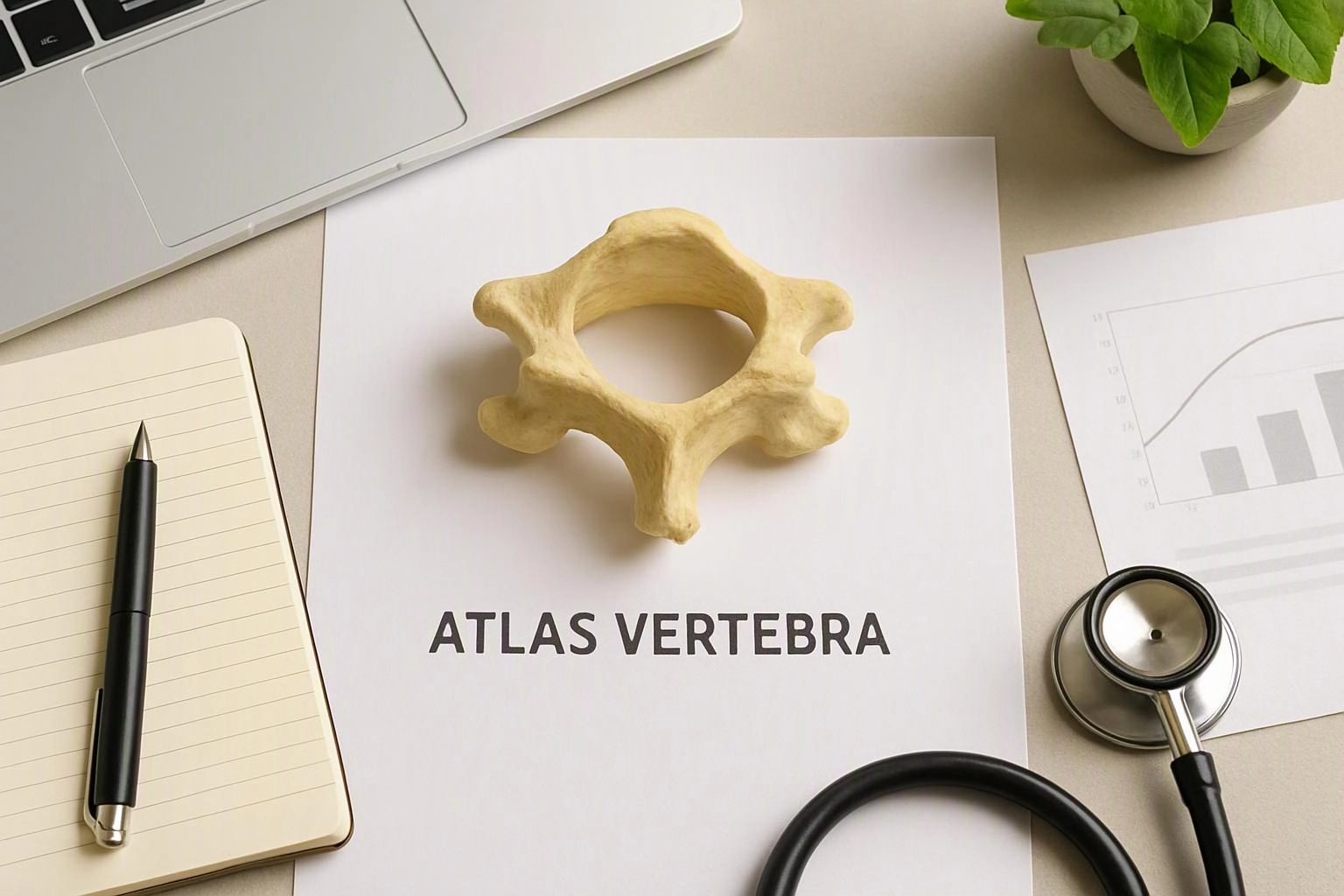
Atlas vertebra works as a ring-shaped support at the top of the neck. Its upper surfaces join the skull, while its lower surfaces connect with the axis vertebra. These joints allow controlled nodding and rotation while helping keep the head balanced over the neck.
Related glossary terms: Cervical Spine, Cervicogenic Headache, Facet Joint.
The atlas has a different structure from most spinal bones because it lacks a typical vertebral body. Its curved arches surround the spinal canal, and its position affects how the upper neck moves during examination. A clinician may compare head motion, neck tenderness, posture, and related muscle tension when reviewing this area.
Headache symptoms can involve several possible sources. The atlas is one part of the upper cervical region, so assessment considers the full pattern instead of treating one bone as the only cause.
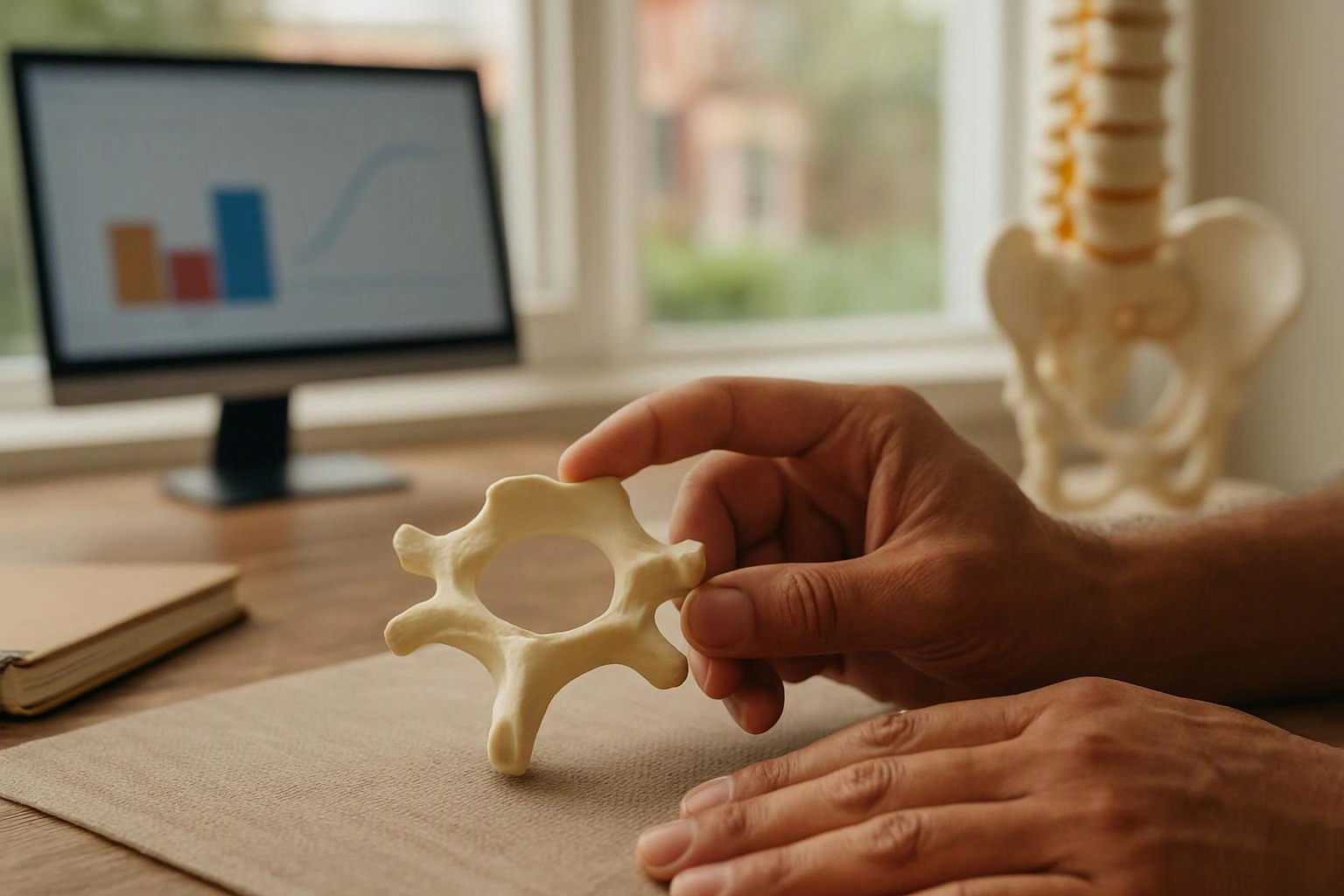
From the Arrowhead Clinic Chiropractor team
When we assess the atlas during headache treatment, we review upper-neck motion, posture, and nearby muscle tension together. We also consider the symptom pattern and the findings from the broader neck examination. This approach helps us distinguish a local joint finding from other possible contributors to head or neck discomfort.
Atlas Vertebra in Practice: A Real-World Example
A person with recurring neck-related headaches may show limited upper-neck rotation and tenderness near the base of the skull. During headache treatment, the clinician assesses the atlas area alongside posture and surrounding muscle function.
Related Services
Related Terms
Cervical Spine
Cervical Spine is the upper section of the vertebral column that supports the head and connects…
Cervicogenic Headache
Cervicogenic Headache is a headache caused by a problem in the neck, with pain referred from…
Facet Joint
A facet joint is a small, paired connection between the back portions of neighboring spinal bones…
Forward Head Posture
Forward Head Posture is a postural pattern in which the head rests ahead of the shoulders…
Arrowhead Clinic Chiropractor
Have Questions About Atlas Vertebra?
Contact Arrowhead Clinic Chiropractor for practical guidance on Atlas Vertebra and related chiropractor work in Atlanta.